

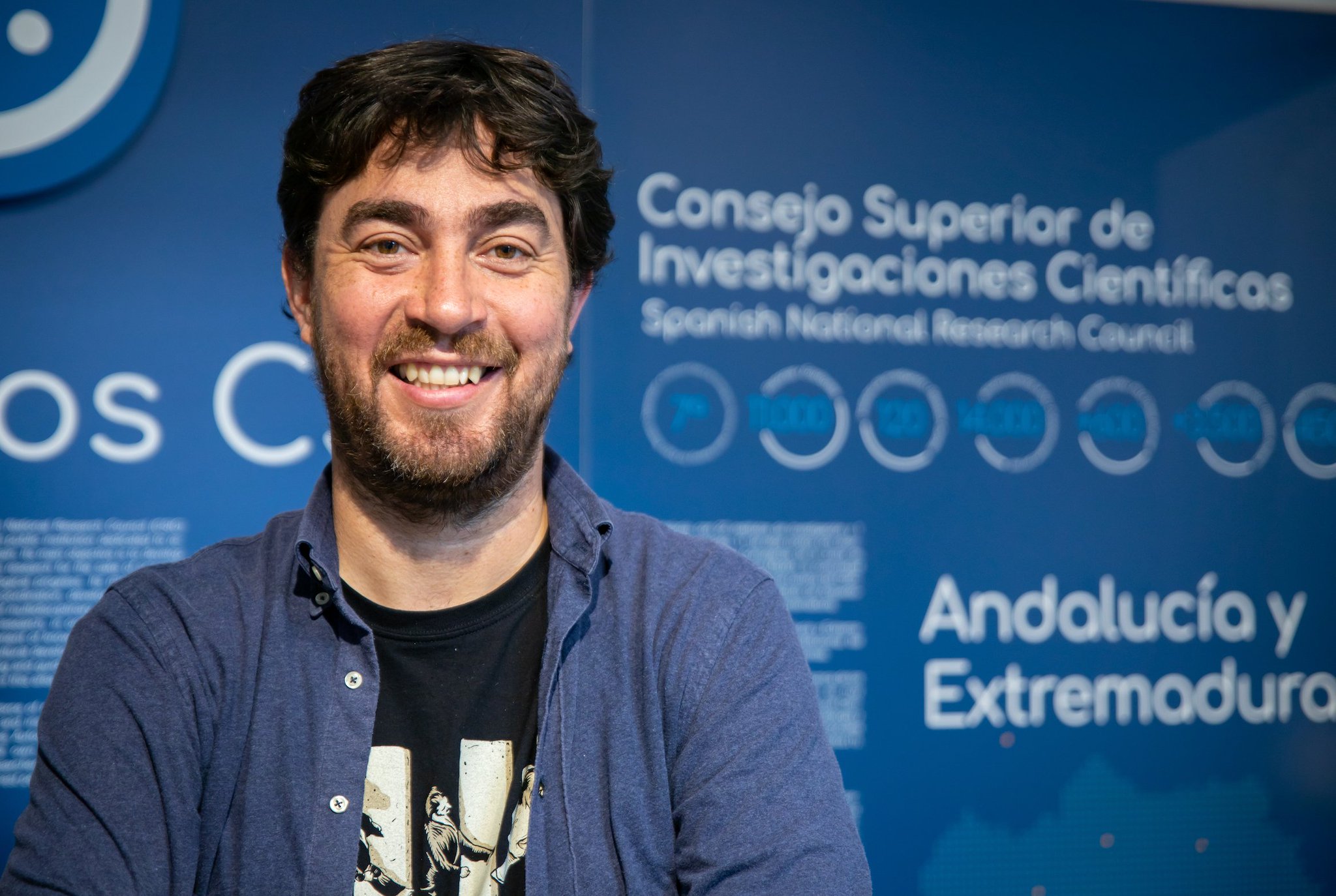
Speaker: Miguel A. Moreno-Mateos Ph.D.
Científico Titular(CSIC) & PI, Centro Andaluz de Biología del Desarrollo, CSIC-Universidad Pablo de Olavide, Sevilla, Spain
Presentation
Host: Dr. Modesto Orozco, Group Leader - Molecular Modelling and Bioinformatics - IRB Barcelona
Node: Cell Pathophysiology / Preclinical Models of Disease
Date: Thursday 25 September 2025, 12:00h
Place: Serratosa Room - PCB
The Maternal-to-Zygotic transition (MZT) orchestrates the reprogramming of early vertebrate development, encompassing zygotic genome activation (ZGA) and the clearance of maternally provided RNAs. While some regulators of MZT have been identified, the vast majority of maternal RNAs remain functionally uncharacterized. We have recently implemented CRISPR-RfxCas13d/CasRx technology in animal embryos, and we have demonstrated that it is highly efficient and specific when used through transient approaches such as ribonucleoprotein complexes or mRNA-gRNA. Using our optimized technology, we have performed a set of screenings targeting hundreds of maternally provided mRNAs in zebrafish. As a proof of principle, we have completed a screening focused on mRNAs encoding protein kinases and phosphatases in zebrafish, uncovering Bckdk as a novel post-translational regulator of MZT. Depletion of bckdk mRNA led to early development defects, global ZGA deregulation, reduced H3K27ac levels, and partial impairment of maternal RNA degradation. Beyond, phospho-proteomic analysis upon Bckdk depletion revealed a reduced phosphorylation of Phf10, a chromatin remodeling factor also involved in ZGA. Further, we revealed that this lower Phf10 phosphorylation ultimately triggered the developmental and molecular phenotype observed in the absence of Bckdk. Altogether, our findings i) demonstrate the potential of CRISPR- RfxCas13d to uncover novel early developmental factors shedding light on the role of Bckdk as post-translational regulator of MZT and ii) contribute to optimize CRISPR-Cas technology for RNA targeting in vivo through transient approaches, promoting the development of CRISPR-Cas knockdown therapies.
IMPORTANT: For attendees outside the PCB community you must register at least 24h before the seminar.
The weekly seminars at IRB Barcelona are scientific events primarily addressed to the Institute’s research community and professionals in the biomedical field. Attendance is intended exclusively for individuals with a genuine and justified scientific interest in the seminar content. Registration should not be used to request supporting documents for visa or immigration purposes. For participants residing outside Spain, in-person attendance requires a formal invitation issued by an IRB Barcelona research group or department. Without such an invitation, access to the institute cannot be guaranteed. IRB Barcelona reserves the right to review and verify all seminar registrations.