
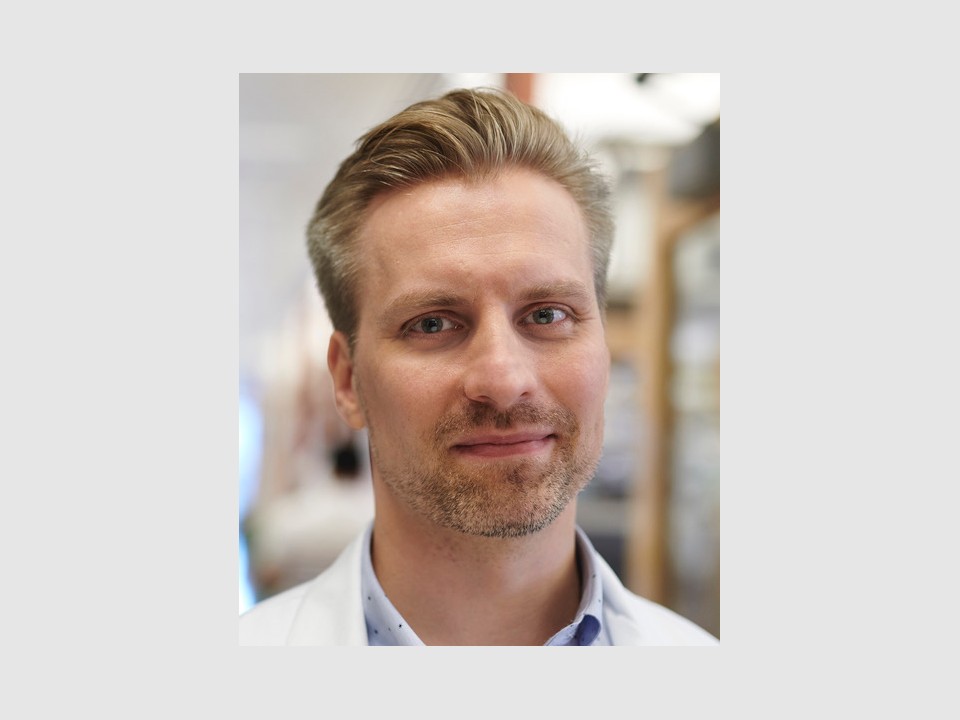
Speaker: Tuomas Tammela, M.D., Ph.D.
Associate Member
Cancer Biology & Genetics Program, Sloan Kettering Institute
Memorial Sloan Kettering Cancer Center
New York NY, USA
Presentation
Organizer: IRB BioMed Seminars
Date: Friday, 9 January 2026, 12:00h
Place: Auditorium, PCB
Host: Prof. Eduard Batlle, Program Coordinator and Group Leader - Colorectal Cancer Laboratory - Cancer Science Programme - IRB Barcelona.
Plasticity—the ability of cells to undergo phenotypic transitions—drives cancer progression and treatment resistance. Thus, plasticity is one of the most fundamental problems in cancer biology and one of the foremost challenges in clinical cancer management today. To date, targeting cancer plasticity has not succeeded in the clinic due to the lack of a fundamental understanding of the underlying mechanisms. Our recent published and ongoing work indicates that plasticity in lung cancer, pancreas cancer, and other carcinomas is concentrated in a minority subset of cancer cells. However, functional studies interrogating such high plasticity cell states (HPCSs) in situ have been lacking. Over the past several years, we have generated mouse models that allow for detection, longitudinal lineage-tracing, and ablation of the HPCS and other defined cancer cell states in lung and pancreas tumors in vivo. Using lineage-tracing, we uncover the HPCS cells are dedifferentiated but possess high capacity for cell state transitions, giving rise to both differentiated and advanced-stage cancer cells in situ in tumors. Longitudinal lineage tracing using secreted luciferases reveals HPCS-derived cells harbor more robust capacity for growth when compared to bulk cancer cells or another defined cancer cell state predicted to possess low plasticity. Suicide gene-mediated ablation of the HPCS in early-stage lesions abrogates tumor progression, whereas ablating HPCS cells in established tumors robustly reduces tumor burden. Leveraging these models, we demonstrate that the HPCS gives rise to treatment-resistant cell states, whereas ablation of the HPCS abrogated resistance to chemotherapy and oncoprotein-targeted therapy. Interestingly, we find an HPCS-like state is ubiquitous in regenerating epithelia and carcinomas of multiple other tissues, revealing a convergence of plasticity programs in healthy and malignant epithelial tissues. In parallel studies, we have uncovered unexpected molecular drivers of this cell state, which operate system-wide in epithelial regenerative processes. These molecular mechanisms offer multiple therapeutic entry points, which may enable targeting of malignant plasticity in cancer patients. This work establishes the HPCS as a critical hub enabling reciprocal transitions between cancer cell states, including acquisition of states adapted to cancer therapies. Targeting the HPCS may suppress cancer progression and eradicate treatment resistance.

IMPORTANT: For attendees outside the PCB community you must register at least 24h before the seminar.
The weekly seminars at IRB Barcelona are scientific events primarily addressed to the Institute’s research community and professionals in the biomedical field. Attendance is intended exclusively for individuals with a genuine and justified scientific interest in the seminar content. Registration should not be used to request supporting documents for visa or immigration purposes. For participants residing outside Spain, in-person attendance requires a formal invitation issued by an IRB Barcelona research group or department. Without such an invitation, access to the institute cannot be guaranteed. IRB Barcelona reserves the right to review and verify all seminar registrations.