
Como parte de nuestra misión de promover una investigación excelente en un entorno multidisciplinar, adquirimos el compromiso de formar a científicos y maximizar el impacto de nuestra ciencia en la sociedad.
Coordinada por la Oficina Académica, con la colaboración de otros departamentos, la formación complementaria se centra en nuestros investigadores doctorales y posdoctorales. Sin embargo, también se implementan actividades de formación a toda la comunidad.
Actividades de formación
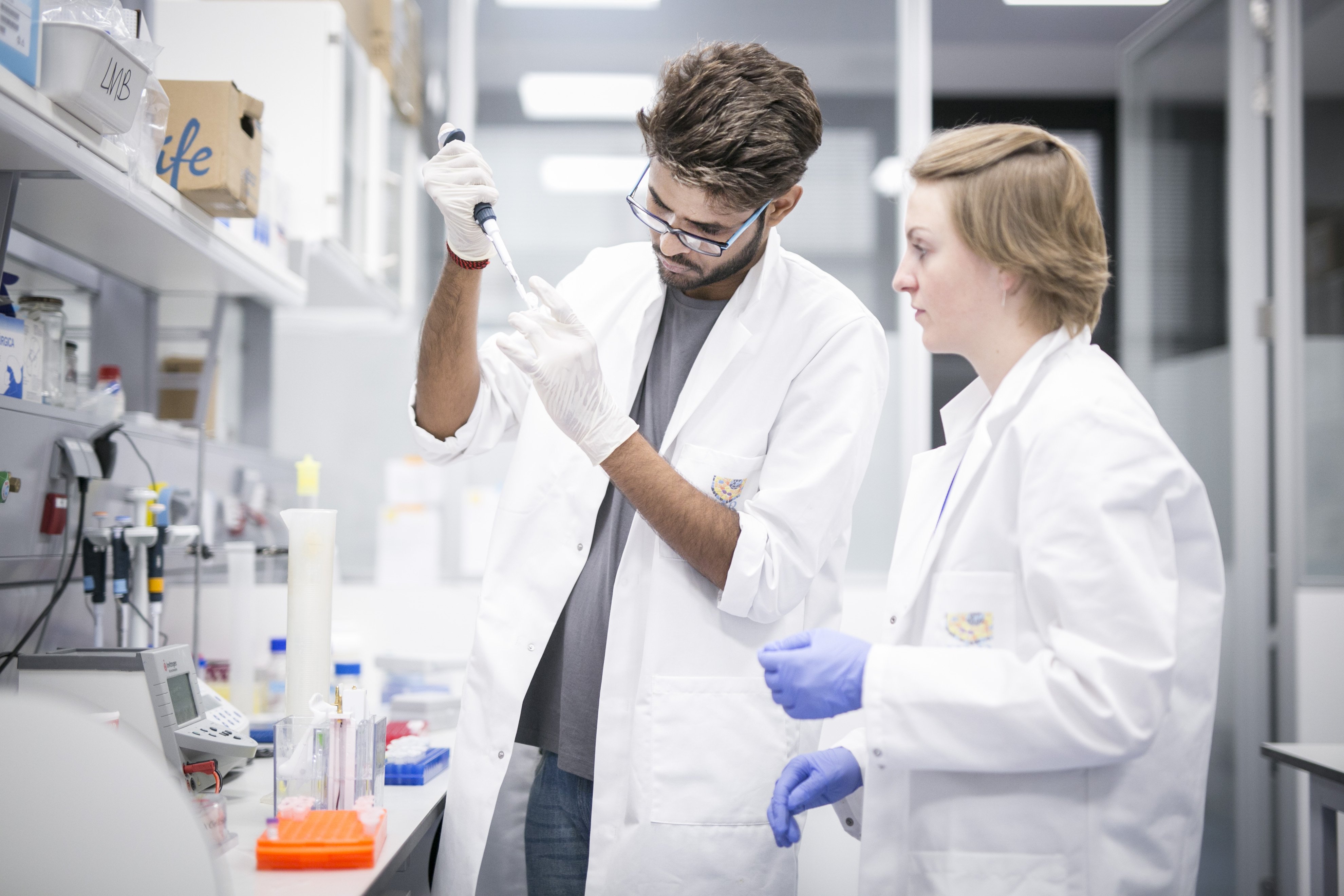
Ofrecemos una amplia gama de actividades de formación periódicas (cursos y talleres) más allá del laboratorio que pretenden desarrollar y fortalecer las competencias básicas complementarias necesarias para una carrera investigadora exitosa. Nuestro programa de formación trata principalmente de habilidades transferibles, pero también incluye cursos más técnicos. Las actividades formativas se dividen en las siguientes categorías:
1. Desarrollo profesional
Talleres para mejorar los conocimientos, habilidades y experiencia de los investigadores, lo cual les permitirá aprovechar su ciencia y abrir oportunidades profesionales más allá del ámbito académico.
2. Innovación
El Departamento de Innovación del IRB Barcelona participa activamente en el diseño de actividades de formación relacionadas con la innovación (ya sea impartiéndolas o facilitando el contacto con expertos). La formación está diseñada para mejorar un amplio espectro de aptitudes tanto técnicas como interpersonales relacionadas con el emprendimiento y el desarrollo empresarial.
Esta sección incluye talleres y actividades formativas, que se dividen en cuatro categorías: transferencia de tecnología, emprendimiento, propuesta de valor e innovación.
3. Comunicación
Los talleres sobre habilidades comunicativas tienen como objetivo ayudar a los investigadores a mejorar su comunicación oral/escrita no solo cuando se dirigen a un público científico, sino también al público en general.
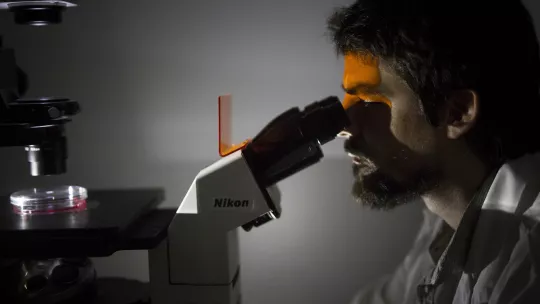
4. Formación científico-técnica
Los talleres de habilidades técnicas y científicas pretenden mejorar las habilidades y los conocimientos de los investigadores con respecto a técnicas específicas, conocimientos informáticos, etc.
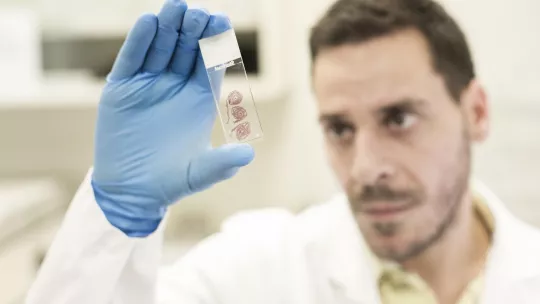
5. Desarrollo profesional personal
Cada investigador doctoral está supervisado por un comité asesor de tesis (TAC), formado por tres miembros. El TAC no solo pretende tutelar, supervisar y orientar al investigador en todos los aspectos relacionados con la tesis y el desarrollo profesional, sino también atender las preocupaciones individuales que puedan surgir.
Además, siguiendo los principios de la Carta Europea del Investigador, a partir de 2020 el IRB Barcelona está implementando un conjunto de medidas para reforzar el desarrollo profesional de forma personalizada. En este sentido, en 2019 varios miembros del Departamento de Recursos Humanos y Asuntos Académicos recibieron formación especializada como “asesores profesionales” y ahora están llevando a cabo planes de desarrollo profesional individualizados para investigadores doctorales, con lo cual los ayudan a identificar, adquirir o fortalecer habilidades que servirán para mejorar sus perspectivas laborales.
Programa de actividades
*Attendance at both sessions is mandatory.
Manage your projects with impact, excellence and efficacy
This course introduces the core concepts, tools, and practices of Project Management. Participants will learn key vocabulary and guidelines, and gain a clear understanding of the end-to-end project management process.
The course offers a broad, practical overview of the Project Management framework. Learning is based on a hands-on approach that combines short theoretical inputs with practice, collaborative learning, and group work on real cases. Throughout the course, each participant will work on their own project and will leave with tangible progress already made.
A theoretical-practical program designed to facilitate self-awareness and self-care to reduce stress through mindfulness. This course is designed to facilitate an understanding of the process and develop personal skills to reduce stress. This course is divided in two sessions, to provide time to reflect and to put in practice all the concepts learnt. Participants should attend both sessions to take the most of this course.
The Writing Bootcamp is a multi-session online course designed for final-year PhD students who are about to begin writing their thesis or are already in the writing process. It offers a practical, structured approach to thesis writing, combining theory, tools, hands-on experience, and peer support.
We will cover theory and practice which should mean that by the end, not only will you know more about writing your thesis, you may well have written some of it! This will be achieved by you carrying on the learning between the sessions and doing set tasks. These tasks are not compulsory but are part of the design of the workshop and are very much aimed at helping you write the thesis-
📅 Dates: June 11 & 12, 2026🕤 Time: 09:30–17:30 (both days)📍 Location: Tower I, Room 3👤 Trainer: Dr Gavin Lucas (TPM Science)🎯 Target audience: 3rd-4th year PhD students & Jr. Postdoctoral Researchers ONLY FROM IRB BARCELONA (if remaining spots, PhD students from 1st and 2nd year will be accepted)
Ever wondered why your paper got desk rejected? Here’s your chance to ask! Claudia Feng will talk about the editorial process and her life as an editor. For those of you interested in pursuing a career in academia, she will talk about factors influencing her decisions of sending papers out to review, managing the peer review process and finally, to ultimately publish work. For those of you who might be looking at career options outside of academia, she will also discuss the steps it took for her to go from the dry lab to editorial. While she can’t promise to have all the answers or give you the closure you might be seeking on that rejected paper you worked really hard on, hopefully she will give you some idea of what goes on after you press the submit button.
The workshop will provide a general description of the unit, an introduction to basic statistical concepts, an overview of research integrity topics and research data management, and hands-on experience of bioinformatic tools available on the web.
Feeling mentally exhausted, unable to switch off after work, or constantly under pressure in your research environment?
You are not alone and there are practical ways to change this.
Research environtments are demanding. Long hours, high cognitive load, uncertainty, and constant pressure can make it difficult to sustain performance without affecting mental health and overall wellbeing.
This programme has been specifically designed to address these challenges.
This QuPath Introductory course is co-organized by PPBI (Portuguese Platform of Bioimaging), LUMC (Leiden University Medical Center), NKI (Netherlands Cancer Institute) and IRB Barcelona, within the Euro-Bioimaging framework.
Managing myself & working with my team: A skills upgrade for postdocs.
Postdoctoral researchers play a central role in driving research projects and supporting junior team members, yet they often receive limited formal training for these responsibilities. This two-day interactive workshop is designed to address the evolving challenges faced by postdocs as experienced researchers with increasing leadership, management, and communication demands.
The workshop focuses on raising awareness and providing a conceptual framework to better understand common professional challenges at the postdoctoral stage. Participants will also acquire practical tools and methods that can be immediately applied in their daily research and team environments.
The journey from a laboratory breakthrough to a life-saving treatment is complex and challenging. This session, "Bridging the Drug Discovery Gap: Meet and connect with Academia, Investors and Pharma" is designed to foster a dynamic dialogue.
Manage your projects with impact, excellence and efficacy
This course introduces the core concepts, tools, and practices of Project Management. Participants will learn key vocabulary and guidelines, and gain a clear understanding of the end-to-end project management process.
The course offers a broad, practical overview of the Project Management framework. Learning is based on a hands-on approach that combines short theoretical inputs with practice, collaborative learning, and group work on real cases. Throughout the course, each participant will work on their own project and will leave with tangible progress already made.
This course aims to familiarize students with key concepts related to research integrity and encourage reflection, discussion, and critical thinking about responsible research conduct and its role in today’s challenging research culture.
Workshop overview
This online training offers scientists a practical introduction to patents and intellectual property. Participants will learn why protecting innovation matters, how patents work, and the key requirements for patentability, including novelty and inventive step. The course also explores alternatives such as know-how, strategies for safeguarding research results, and how to assess risks through freedom-to-operate and due-diligence considerations. Ideal for researchers seeking to strengthen their understanding of IP in a research environment.
Workshop overview
Women in science face unique challenges in environments that demand excellence, resilience and constant achievement. Beyond technical expertise, thriving in academia requires self-awareness, confidence and the ability to navigate complex power dynamics.
This interactive workshop, led by Dr. Miriam Bayés, invites participants to explore how to lead and grow with authenticity, overcoming self-doubt, recognising their personal sources of power and cultivating a sense of balance and purpose in their professional journey.
Through practical tools, guided reflection and peer connection, participants will strengthen their confidence, learn to use their influence effectively and develop strategies to thrive both personally and professionally.
Start your PhD with confidence and clarityBeginning your PhD is an exciting new chapter — and a big step. The expectations shift from passing courses to creating original research, from following directions to defining your own path. It’s a journey that demands more than technical skills: it requires focus, organisation, communication, and the ability to manage yourself and your project with confidence.
This two-day interactive workshop is designed to help you start your PhD on solid ground. You’ll gain the essential, non-technical skills that will make your research life easier, more effective, and more rewarding. Through hands-on activities, reflection and collaboration, you’ll learn practical tools you can apply right away — to plan your work, communicate with impact, build positive collaborations and keep your motivation strong.
The Advanced Digital Microscopy Core Facility is organising a course on Advanced Optical and Fluorescence Microscopy and BioImage Analysis.
In this course we will introduce the basic concepts, techniques and procedures of Project Management.
Do you supervise master’s or PhD students? This interactive two-day online workshop will help you develop practical skills and best practices to effectively support your students. You’ll learn how to navigate supervisory challenges, build strong mentoring relationships, and balance this role with other responsibilities.