
Presentation
Organizer: IRB BioMed Seminars
Date / Time: Friday, June 19 at 12:00
Place: Auditorium PCB
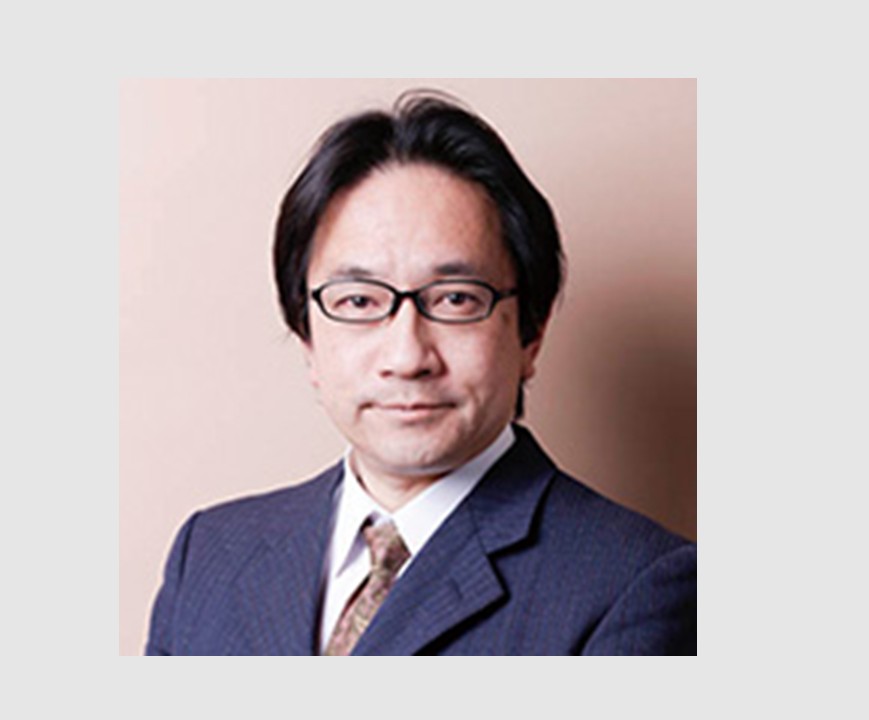
Speaker: Professor Osamu Nureki, PhD. Department of Biophysics and Biochemistry, Graduate School of Science, The University of Tokyo.
Host: Prof. Lluis Ribas. Group Leader. IRB Barcelona - Gene Translation Lab - Aging and Metabolism Programme.
Life originated when cells, isolated from the external environment by insulated membranes, were formed and non-coding RNAs began to function as ribozymes; furthermore, it was the membrane— specifically the nervous system—and the genome—composed of nucleic acids—that drove the evolution of higher eukaryotes. I believe that all biological phenomena begin with the encounter between membranes and nucleic acids, and I am currently advancing research into the crosstalk between membranes and nucleic acids, with my current diverse researches to date now beginning to converge. Specifically, I aim to elucidate the phenomena whereby nucleic acids permeate membranes, undergo chemical reactions such as maturation on the surface of organelle membranes, and make membrane fusion.
The bacterial type II secretory apparatus takes up foreign DNA across the cell membrane, thereby altering the cell’s genetic makeup (natural transformation), which was discovered 100 years ago by Frederick Griffith. We have successfully solved cryo-electron microscopy (cryo-EM) structures of ComEC from three bacteria in DNA-free, ssDNA-bound, and dsDNA-bound forms, together with biochemical analyses1. These structures reveal that ComEC cleaves one strand of dsDNA at its extracellular β-lactamase–like (BLL) domain and guides the remaining strand into a positively charged pore formed within the transmembrane competence domain possibly via a ratchet mechanism mediated by intracellular ssDNA-binding proteins. Indeed, transgenic Bacillus subtilis with mutation of Arg and His residues essential for DNA translocation by ComEC revealed significant reduction in natural transformation efficiency1. Intriguingly, the DNA translocating channel has an amphipathic feature, which is well suited for the passage of the hydrophilic phosphate groups and hydrophobic nucleobases of ssDNA. These findings provide a structural basis for the long-hypothesized roles of ComEC in both DNA processing and translocation across the inner membrane during natural transformation.
Meanwhile, the phenomenon of systemic RNA interference in Caenorhabditis elegans upon the addition of double-stranded RNA (dsRNA) to the culture medium depends on the membrane protein SID1, which mediates dsRNA uptake. We determined the cryo-EM structure of the SID1-dsRNA complex and revealed that SID1 lacks a channel-like pore and instead forms a self-assembled multimeric complex with dsRNA2. Live-cell imaging showed that SID1-dependent dsRNA uptake occurs against a concentration gradient and is inhibited under conditions that suppress endocytosis2. Single-molecule imaging revealed that SID1 dimers multimerise following dsRNA binding to change membrane curvature, followed by clathrin accumulation and dynamin recruitment2. The structure of the dodecameric SID1-dsRNA complex suggests that SID1 multimers fold large dsRNA molecules into a compact size, allowing them to be packaged into size-restricted endosomes. Furthermore, we showed that when endosomes containing dsRNA fuse with lysosomes, SID-1 is degraded, allowing the dsRNA to return to its original size and break through the endosomal membrane to enter the cytoplasm. Conversely, we found that through the transient binding of SID-1 to Arf6 GTPase, dsRNA is delivered to the basal side of the cell via transcytosis, transported via blood to cells throughout the body, and induces systemic RNA interference2.
Reference
1. H. Hirano, N. Tsuji, S. Chiba, and Osamu Nureki “Structural basis for DNA processing and membrane translocation by ComEC in natural transformation” Science in press (2026).
2. A. Takai, K. Kumazaki, T. Awazu, T. Kambara, S. Murakoshi, T. Kato, M. Hiraizumi, Y. Kise, T. Kusakizako, T. Nishizawa, Y. Okada, and Osamu Nureki “Structural insights into SID1-mediated dsRNA uptake: A self-organizing endocytic mechanism” Nat. Commun. in revision (2026).
IMPORTANT: For attendees outside the PCB community you must register at least 24h before the seminar
The weekly seminars at IRB Barcelona are scientific events primarily addressed to the Institute’s research community and professionals in the biomedical field. Attendance is intended exclusively for individuals with a genuine and justified scientific interest in the seminar content. Registration should not be used to request supporting documents for visa or immigration purposes. For participants residing outside Spain, in-person attendance requires a formal invitation issued by an IRB Barcelona research group or department. Without such an invitation, access to the institute cannot be guaranteed. IRB Barcelona reserves the right to review and verify all seminar registrations.