
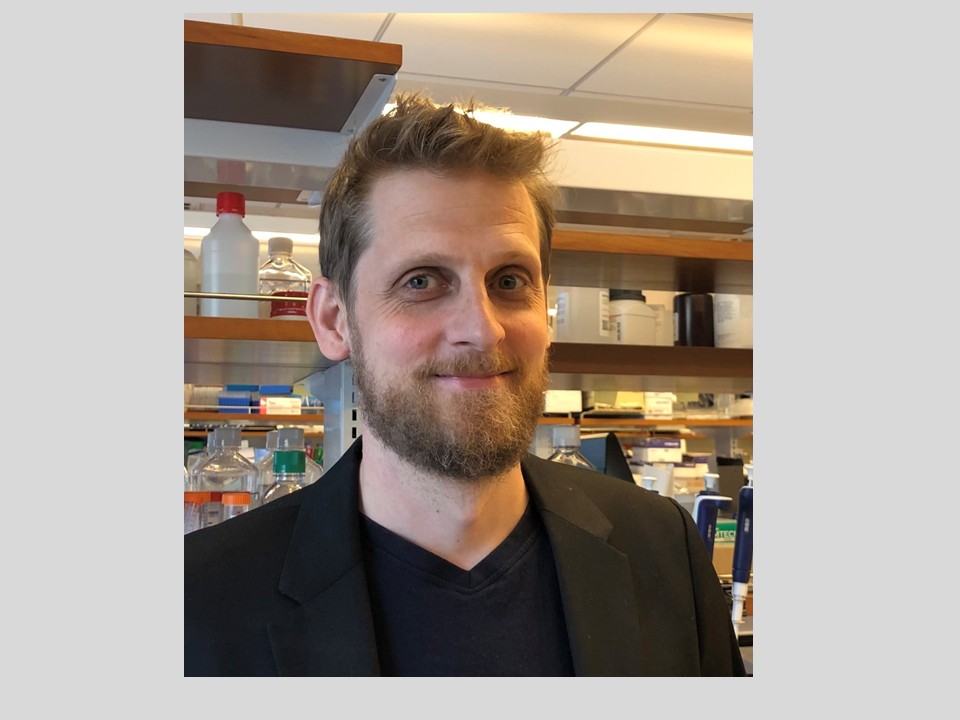
Speaker: Prof. Hagen Tilgner, PhD.
Center for Neurogenetics
Brain and Mind Research Institute
Weill Cornell Medical College
New York. USA
Presentation
Organizer: IRB BioMed Seminars
Date: Friday, 03 July 2026, 12:00h
Place: Fèlix Serratosa, PCB
Host: Prof. Núria López-Bigas, Group Leader - Biomedical Genomics Laboratory - Cancer Science Programme - IRB Barcelona.
Complex tissue includes diverse cell types employing distinct RNA isoforms. To untangle full-length cell-type specific brain isoforms, we developed single-cell long-read technology for many thousands of cells (from previous approaches for 10-100 cells) in fresh tissues (ScISOr-Seq; Gupta, Collier et al, 20181) and in frozen tissues (SnISOr-Seq; Hardwick, Hu, Joglekar et al, 20222). These approaches revealed the rules of combination of TSSs, alternative exons and poly(A) sites and their cell-type specificity. Autism-associated exons (as previously described) but also FTD-associated exons are highly variably-used across cell types2. For spatial resolution, we developed spatially-barcoded isoform sequencing with 60um (Joglekar et al, 20213), 10um (Foord, Prjibelski, Hu et al 20254) and 220nm (Michielsen, Prjibelski, Foord et al, biorxiv5) spots, showing that often isoform switches correlate with precise boundaries of brain structures (e.g., choroid plexus to hippocampus). However, genes including Snap25, use a gradient of exon inclusion through the brain3. Choroid plexus epithelial cells show a dramatically distinct isoform profile, which originates most strongly from TSS usage3. During human puberty, layer4-excitatory splicing is more regulated than in other cortical layers – probably influenced by retroviral sequences4. More generally, we can now detect isoform-expression variability that does not correspond to known brain structures5.
For the NIH Brain Initiative, we have mapped single-cell isoforms across development, brain regions and species. Neurotransmitter release and reuptake as well as synapse turnover genes harbor variability in the same cell type across anatomical regions but the same cell type traced across development shows more isoform variability than across adult anatomical regions. Moreover, most cell-type-specific exons in adult mouse hippocampus behave similarly in human hippocampi. However, human brains have evolved additional cell-type specificity in splicing (Joglekar et al, 20246). Additionally, the concurrent measurement of chromatin and splicing patterns in post-mortem human brain shows broadly-speaking convergent dysregulation of both modalities in similar cell types in Alzheimer’s disease but more divergence between both modalities in evolution (Hu, Foord, Hsu et al, 20257). Finally, we have advanced our understanding of error sources of PacBio and ONT (Mikheenko, Prjibelski et al, 20228) and implemented highly accurate long-read software (Prjibelski, Mikheenko et al, 20239).
1 Gupta et al, Nat Biotechnol, 2018
2 Hardwick et al, Nat Biotechnol, 2022
3 Joglekar et al, Nat Commun, 2021
4 Foord et al, Nat Commun, 2025
5 Michielsen et al, biorxiv, 2025
6Joglekar et al, Nat Neurosci, 2024
7 Hu et al, Nat Biotechnol, 2025
8 Mikheenko et al, Genome Res, 2022
9 Prjibelski et al, Nat Biotechnol, 2023

IMPORTANT: For attendees outside the PCB community you must register at least 24h before the seminar.
The weekly seminars at IRB Barcelona are scientific events primarily addressed to the Institute’s research community and professionals in the biomedical field. Attendance is intended exclusively for individuals with a genuine and justified scientific interest in the seminar content. Registration should not be used to request supporting documents for visa or immigration purposes. For participants residing outside Spain, in-person attendance requires a formal invitation issued by an IRB Barcelona research group or department. Without such an invitation, access to the institute cannot be guaranteed. IRB Barcelona reserves the right to review and verify all seminar registrations.