

Speaker: Ari Melnick, MD FAACR
Director
Josep Carreras Leukaemia Research Institute. Badalona
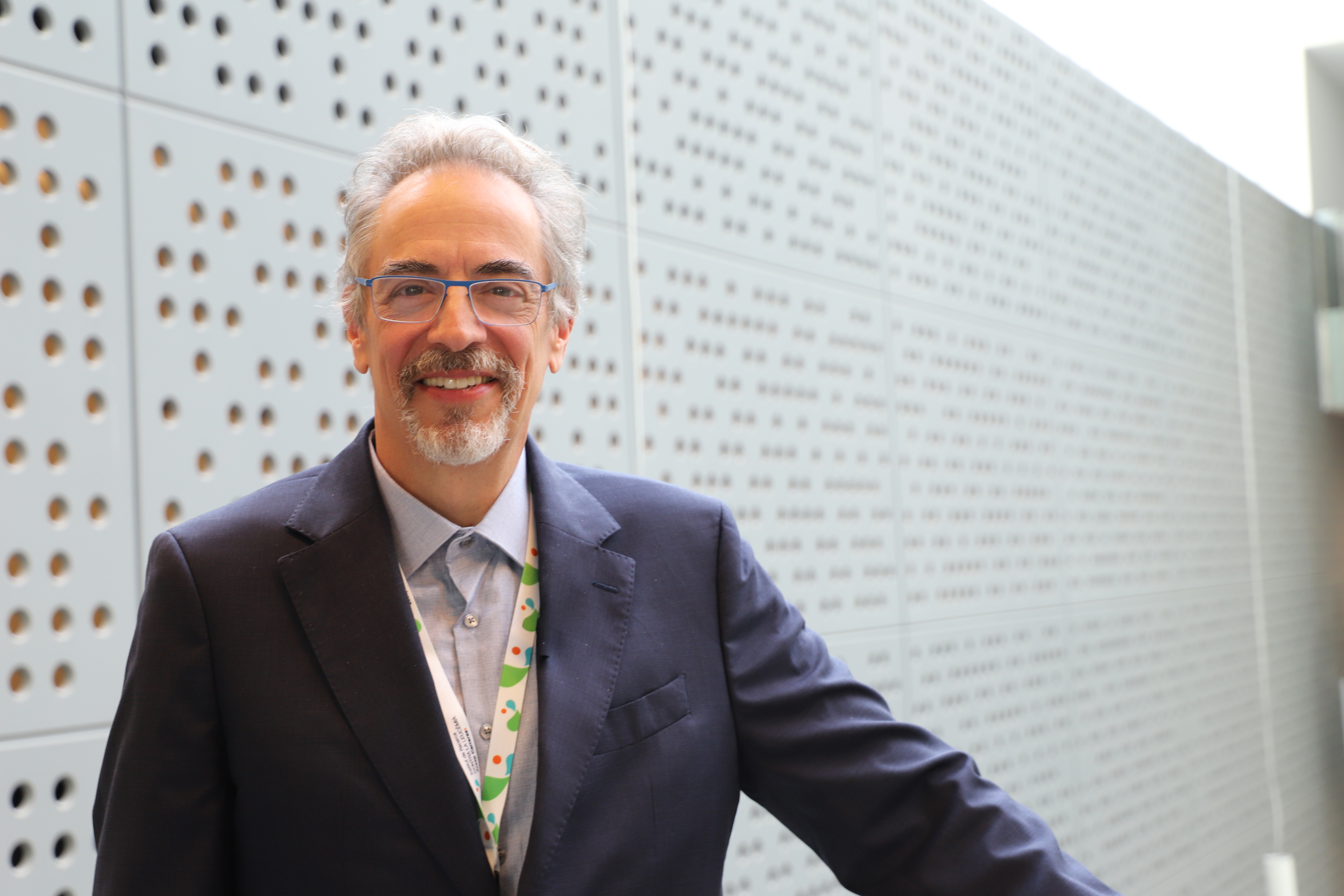
Presentation
Organizer: IRB BioMed Seminars
Date: Friday, 09 October 2026, 12:00h
Place: Auditorium, PCB
Host: Alejo Rodriguez-Fraticelli,PhD. Group Leader - Quantitative Stem Cell Dynamics Laboratory - Aging and Metabolism Programme - IRB Barcelona.
Most Immunological neoplasms originate from B cells undergoing the germinal center (GC) reaction during the humoral immune response. This reaction involves rapid phenotypic changes in GC B cells, tightly regulated by signaling through the immune synapse with T follicular helper (TFH) cells. These interactions orchestrate critical cell fate decisions, including differentiation into antibody-secreting plasma cells or memory B-cell subsets. A defining feature of the GC reaction are successive waves of epigenetic and 3D genome architectural reprogramming events, the driving factors of which remain unknown. Many lymphoma-initiating mutations function by disrupting or hijacking these immune synapse–driven epigenetic programs. During the proliferative phase of the GC response, B cells transiently suppress immune synapse gene expression, allowing for somatic hypermutation to proceed unimpeded by immune editing. Exit from the GC and terminal differentiation are then guided by renewed immune synapse signaling. Disruption of this circuitry is a hallmark of lymphomagenesis. For example, mutations in epigenetic regulators such as EZH2, CREBBP, and KMT2D impair immune synapse gene regulation and reshape the tumor immune microenvironment in distinct ways. Among these, ARID1A, a key component of the BAF chromatin remodeling complex, is frequently mutated in B-cell lymphomas. We found that ARID1A governs GC B-cell fate by enabling the sequential and cooperative binding of PU.1 and NF-κB at target genes essential for cytokine and CD40 signaling, pathways emanating from TFH interactions. This ARID1A-dependent loading mechanism provides a molecular explanation for GC-context specificity in NF-κB transcriptional programming. Loss of ARID1A skews GC output toward immature IgM⁺CD80⁻PDL2⁻ memory B cells—cells with increased potential to re-enter new GC reactions. In mouse models, ARID1A haploinsufficiency cooperates with BCL2 to accelerate aggressive lymphoma progression. Clinically, patients with ARID1A-inactivating mutations exhibit a memory B-cell–like transcriptional state, associated with poor prognosis and heightened risk of transformation. While many mutations affect immune synapse signaling indirectly, others operate through orthogonal mechanisms. For instance, SETD2 mutations promote oncogenesis by impairing DNA damage recognition, leading to genomic instability. Meanwhile, Histone H1 mutations appear to reactivate silenced embryonic stem-cell–like transcriptional programs, suggesting that enhanced epigenetic plasticity may confer tumor fitness and transformation potential. Together, these findings highlight that B-cell lymphomagenesis is driven by disruption of tightly regulated GC epigenetic programs. The integration of immune synapse signaling, histone modifications such as H3 phosphorylation, and 3D genome remodeling forms a unifying model that explains how lineage-defining decisions go awry in immune cancers. Importantly, many of these oncogenic epigenetic alterations are targetable, and novel epigenetic therapies offer a path toward personalized interventions based on the precise molecular lesions driving lymphomagenesis. We have capitalized on our understanding of these mechanism to develop novel precision immuno-epigenetic therapeutic regimens clinical trials, which are yielding favorable effects in human patients

IMPORTANT: For attendees outside the PCB community you must register at least 24h before the seminar.
The weekly seminars at IRB Barcelona are scientific events primarily addressed to the Institute’s research community and professionals in the biomedical field. Attendance is intended exclusively for individuals with a genuine and justified scientific interest in the seminar content. Registration should not be used to request supporting documents for visa or immigration purposes. For participants residing outside Spain, in-person attendance requires a formal invitation issued by an IRB Barcelona research group or department. Without such an invitation, access to the institute cannot be guaranteed. IRB Barcelona reserves the right to review and verify all seminar registrations.