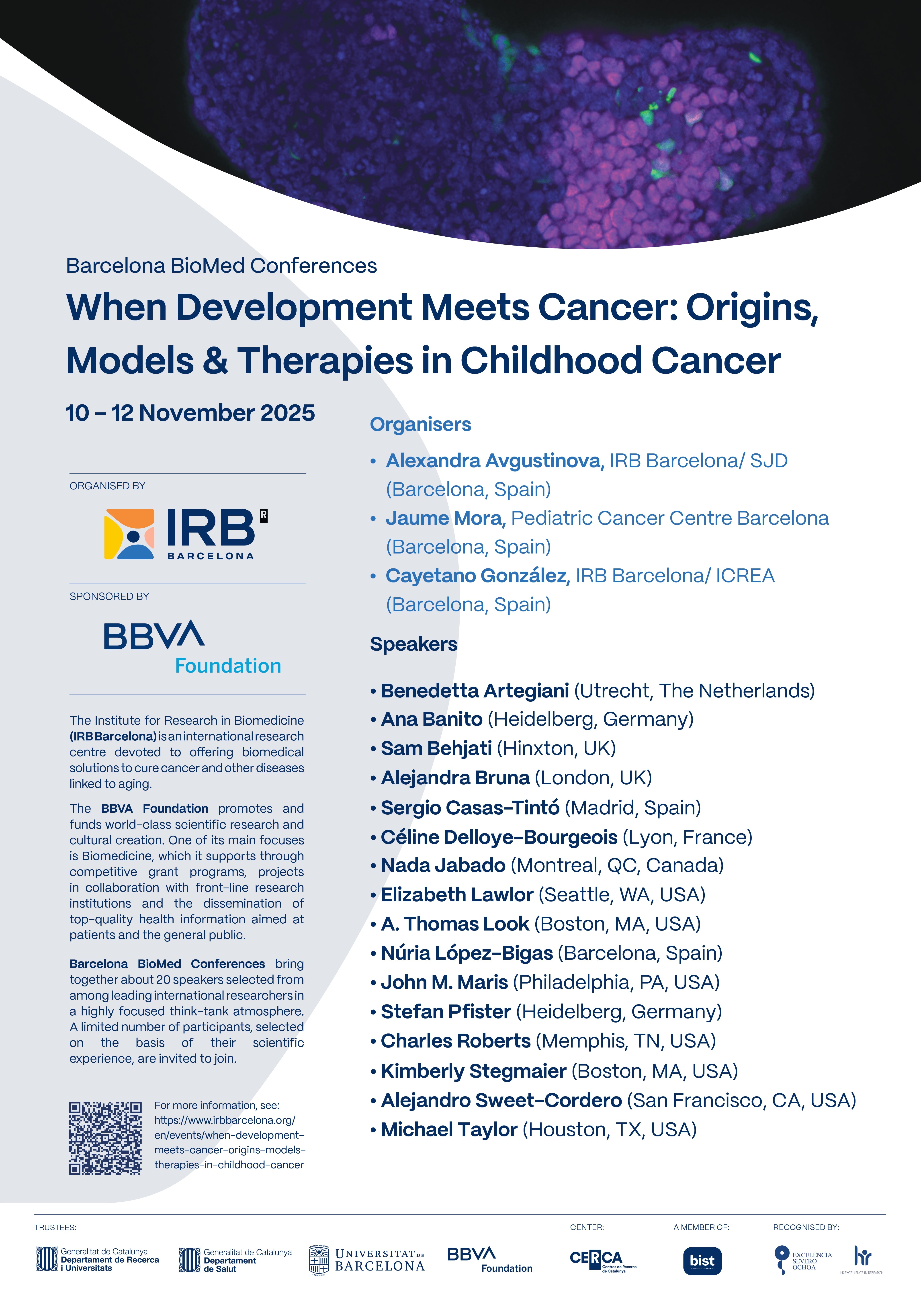
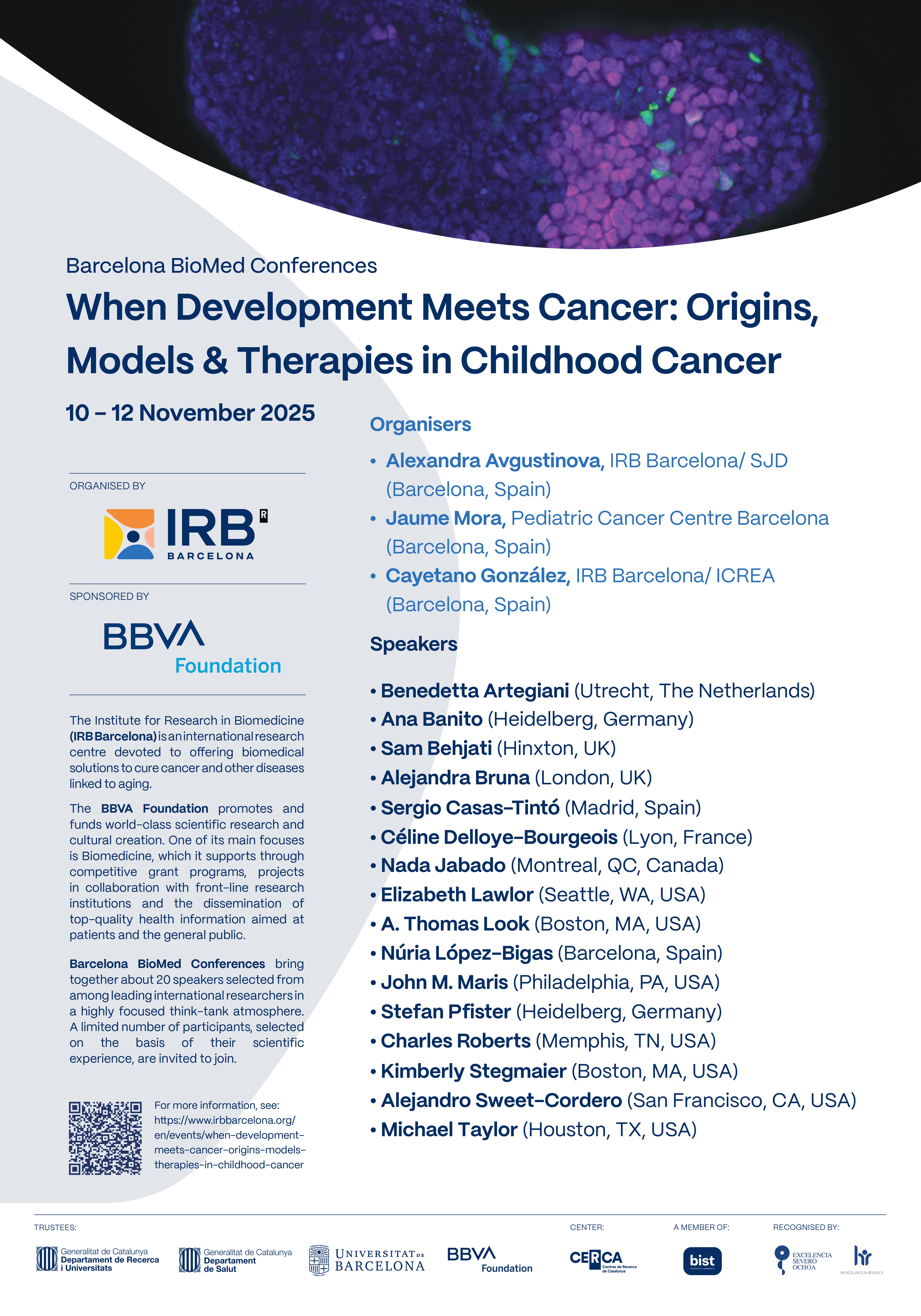
Childhood cancers are believed to be rooted in aberrant development, a notion supported by their typically low mutational burden, the high prevalence of single (often epigenetic) driver events, and their occurrence during narrow developmental periods. Yet the precise origins of many childhood cancers, as well as the exact molecular states that were prone to malignant transformation upon oncogenic insult, remain elusive. At the intersection of developmental biology, oncology, and translational research, this BioMed conference will explore how developmental pathways contribute to tumour initiation, progression, tumour cell plasticity and response to therapy.
Presentation
We will bring together a multidisciplinary group of scientists and clinicians to discuss the latest advances in understanding the cellular and molecular origins of childhood tumours, the development of faithful preclinical models, and the identification of novel therapeutic strategies. The programme will include sessions on stem cell-based modelling, transgenic and organoid systems, tumour heterogeneity and evolution, and new approaches to targeting childhood cancers — from epigenetic and metabolic interventions to immunotherapies.
By bridging fundamental and translational science, this meeting aims to foster new insights into the developmental underpinnings of childhood cancers and promote collaborative approaches to tackling one of the most challenging areas in oncology. We welcome researchers across disciplines who are interested in the convergence of development and cancer biology, with the shared goal of improving outcomes for children affected by cancer.
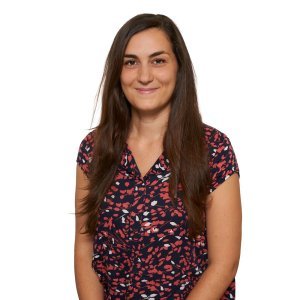
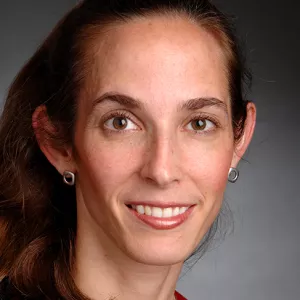
Alexandra Avgustinova
IRB Barcelona/ SJD
(Barcelona, Spain)
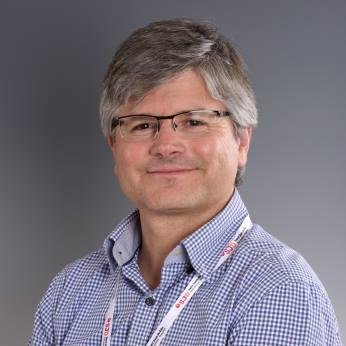
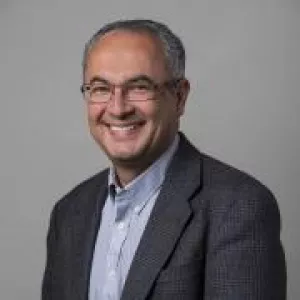
Jaume Mora
Pediatric Cancer Center Barcelona
(Barcelona, Spain)
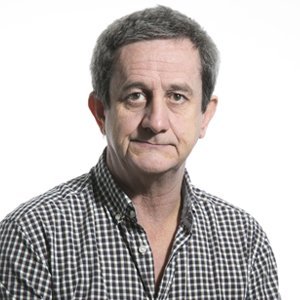
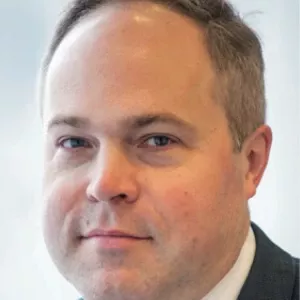
Cayetano González
IRB Barcelona/ ICREA
(Barcelona, Spain)
- €0 – Attendees affiliated with the organizing institutions (IRB Barcelona & Sant Joan de Déu)
- €100 + 21% IVA= €121 Attendees from universities and other public institutions
- €200 + 21% IVA= €242 Attendees from companies and industries from the private sector
Please note that we reserve the right to cancel your registration should your application not be accepted, in which case any fees paid will be fully refunded.
Priority will be given to those who submit the highest quality abstracts for short talks or posters and the order of registration will be considered.
Abstracts should include a title, authors, affiliations, summary (max 250 words) and references
REGISTRATION OVER
(Note: Any issue about the registration or abstract, please contact: meritxell.gavalda@irbbarcelona.org)
Programme
Monday, 10 November
8.30 Registration
9.00 Welcome by Francesc Posas (IRB Barcelona, Director) and organisers (Alexandra Avgustinova, Jaume Mora and Cayetano González)
Session I: Genetic models for childhood cancer
Chair: Jaume Mora, Pediatric Cancer Centre Barcelona (Barcelona, Spain)
9.15 Childhood Cancers are Different: Unique Developmental Mechanisms, Models, and Therapeutic Strategies
A. Thomas Look, Dana-Farber/Boston Children's (Boston, MA, USA)
9.50 Developmental tumours in Drosophila
Cayetano González, IRB Barcelona/ ICREA (Barcelona, Spain)
10.25 Short talk 1: Origins of pediatric PIK3CA-related disorders
Ana Angulo-Urarte, Josep Carreras Leukaemia Research Institute (Barcelona, Spain)
10.40 -11.25 Coffee break and poster session
Chair: Inmaculada Hernández Muñoz, Institut de Recerca Sant Joan de Déu (Barcelona, Spain)
11.25 Novel experimental genetic model of pediatric Diffuse Intrinsic Pontine Glioma
Sergio Casas-Tinto, ISCIII (Madrid, Spain)
12.00 Short talk 2: ALK mutations drive expansion of progenitor cells during sympathoadrenal commitment and prime neuroblastoma initiation
Margareta Wilhelm, Karolinska Institutet (Stockholm, Sweden)
12.15 Short talk 3: Redefining Developmental Cancers with 3D Engineered Functional Niches
Aránzazu Villasante, IBEC (Barcelona, Spain)
12.30 When Development Goes Wrong: How Embryonic Programs Fuel Neuroblastoma Tumoral and Metastatic Dynamics
Céline Delloye-Bourgeois, CRCL-CNRS (Lyon, France)
13.05 -14.05 Lunch and poster session
Session II: In vitro and in vivo models of tumour initiation
Chair: Guillem Pascual-Pasto, The Children's Hospital of Philadelphia (Philadelphia, PA, USA/ Pediatric Cancer Centre Barcelona (Barcelona, Spain)
14.05 Understanding and Modeling Oncogenic Drivers in Sarcomas
Ana Banito, KITZ (Heidelberg, Germany)
14.40 Novel human brain tumor organoid models unravel progenitor behavior characteristics
Benedetta Artegiani and Delilah Hendriks* (*equal contribution)
Princess Máxima Center for Pediatric Oncology (Utrecht, The Netherlands)
15.15 Short talk 4: The translocation effect: going beyond the fusion protein expression in MLL-AF9 leukemia
Aleksandra Sparavier, CNAG (Barcelona, Spain)
15.30 Short talk 5: Building in vitro Ewing sarcoma models via cell fate engineering
Ornella Urzì, St. Anna Children’s Cancer Research Institute (Vienna, Austria)
15.45 – 16.30 Coffee break and poster session
Chair: Diego Velázquez, IRB Barcelona / SJD (Barcelona, Spain)
16.30 Short talk 6: Integrin-α9 in oncogenic PI3K-driven lymphatic malformations: a key player in disease recurrence?
Sandra D. Castillo, Pediatric Cancer Center Barcelona (Barcelona, Spain)
16.45 Short talk 7: Galectin-3 drives SHH-medulloblastoma through primary ciliary signaling and metabolic rewiring
Ann-Sophie Oppelt, Karolinska Institutet (Stockholm, Sweden)
17.00 Mapping malignant rhabdoid tumour heterogeneity to reveal novel treatment
opportunities
Alexandra Avgustinova, IRB Barcelona/ SJD (Barcelona, Spain)
17.35- 18.45 Welcome drinks and poster session
Tuesday, 11 November
Session III: Developmental origins of childhood cancer
Chair: Alexandra Avgustinova, IRB Barcelona/ SJD (Barcelona, Spain)
9.00 Embryonal Origin of Childhood Tumors – Exploiting Developmental Insights for Diagnosis and Therapy
Stefan Pfister, KITZ (Heidelberg, Germany)
9.35 Reconstructing human development and the origins of childhood cancer
Sam Behjati, Wellcome Sanger Institute (Hinxton, UK)
10.10 Short talk 8: Timing the Origin of Pediatric Rhabdoid Tumors
Mònica Sánchez-Guixé, IRB Barcelona (Barcelona, Spain)
10.25 Short talk 9: Targeting childhood oncoproteins
Yael P. Mossé, Children´s Hospital of Philadelphia (Philadelphia, PA, USA)
10.40 -11.20 Coffee break and poster session
Chair: Cristina Mayor-Ruiz, IRB Barcelona (Barcelona, Spain)
11.20 Mutagenic and Clonal Promotion effect of Chemotherapy in Children
Núria López-Bigas, IRB Barcelona/ICREA (Barcelona, Spain)
11.55 Short talk 10: Mechanism and vulnerabilities of the SAGA complex in pediatric leukemia
Hannah Beneder, St. Anna Children's Cancer Research Institute (Vienna, Austria)
12.10 Short talk 11: Developing Small Molecule Degraders for the Treatment of Pediatric Solid Tumors
Selina Troester, IRB Barcelona (Barcelona, Spain)
12.25 Tackling Vulnerabilities in Oncohistone-Mutant Gliomas
Nada Jabado, RI-MUHC (Montreal, QC, Canada)
13.00-14.30 Lunch and poster session
Session IV: Epigenetic mechanisms and dependencies
Chair: Sara Sánchez-Molina, Institut de Recerca Sant Joan de Déu (Barcelona, Spain)
14.30 Chromatin, development and cancer: from mechanisms to emerging therapies
Charles Roberts, St. Jude Children's Research Hospital (Memphis, TN, USA)
15.05 Short talk 12: Charting the Spectrum of Regulatory and Intercellular Programs Driving Cell Plasticity and Tumor Microenvironment Interactions in Neuroblastoma
Vittorio Zanzani, CBIGR- CRIG (Ghent, Belgium)
15.20 Epigenetic heterogeneity defines osteosarcoma subtypes and their response to targeted therapies
Alejandro Sweet-Cordero, University of California San Francisco (San Francisco, CA, USA)
15.55- 16.35 Coffee break and poster session
Chair: Sandra D. Castillo, Pediatric Cancer Center Barcelona (Barcelona, Spain)
16.35 Targeting Plasticity to Prevent Childhood Cancer Relapse
Alejandra Bruna, ICR (London, UK)
17.10 Short talk 13: KAT6A and KAT6B are therapeutic targets to enhance the efficacy of differentiation therapy and GD2 immunotherapy in NB
Nina Weichert-Leahey, Dana-Farber Cancer Institute (Boston, MA, USA)
17.25 Human Embryonic Mesenchymal Stem Cells as the cell of origin of Ewing Sarcoma
Jaume Mora, Pediatric Cancer Centre Barcelona (Barcelona, Spain)
18.00 End of session
20.30 Speakers and Short talk’s dinner
Wednesday, 12 November
Session V: New frontiers in childhood cancer therapy
Chair: Cayetano González, IRB Barcelona/ ICREA (Barcelona, Spain)
9.00 Targeting oncofetal proteins with peptide-centric CAR T cells
John M. Maris, Children´s Hospital of Philadelphia (Philadelphia, PA, USA)
9.35 TGF-beta signaling in Ewing Sarcoma: It matters after all
Elizabeth Lawlor, Seattle Children’s (Seattle, WA, USA)
10.10 Short talk 14: Next generation GPC2-targeted immunotherapies for NB and RB
Guillem Pascual-Pasto, The Children's Hospital of Philadelphia (Philadelphia, PA, USA/ Pediatric Cancer Centre Barcelona (Barcelona, Spain)
10.25 -11.10 Coffee break and poster session
Chair: Mònica Sánchez-Guixé, IRB Barcelona (Barcelona, Spain)
11.10 Integrating Functional with Chemical Genomics Toward New Pediatric Cancer Therapies
Kimberly Stegmaier, Dana-Farber/Boston Children's (Boston, MA, USA)
11.45 Short talk 15: Armoured CAR T cell redirecting immunotherapy for metastatic and refractory ES
Carla Panisello, Josep Carreras Leukaemia Research Institute (Barcelona, Spain)
12.00 Homo sapiens specific changes to the rhombic lip predispose to medulloblastoma, and often a opportunity to prevent rather than treat medulloblastoma
Michael Taylor, Texas Children's Hospital Feigin Tower (Houston, TX, USA)
12.35 Concluding remarks and end of conference
Venue
The BARCELONA BIOMED CONFERENCE When Development Meets Cancer: Origins, Models & Therapies in Childhood Cancer will be placed at the Recinte Modernista de Sant Pau in Barcelona.
Recinte Modernista de Sant Pau
Sala Pau Gil (conference room)
Espai 1902 + Sala 1 pl. -1 (poster sessions + lunches & coffee breaks)
Accomodation
Speakers will be lodged at the Hotel Catalonia Sagrada Familia
Aragó, 577- 579
08026, Barcelona
Telephone: +34 93 245 89 05
Speakers



Poster