

Images
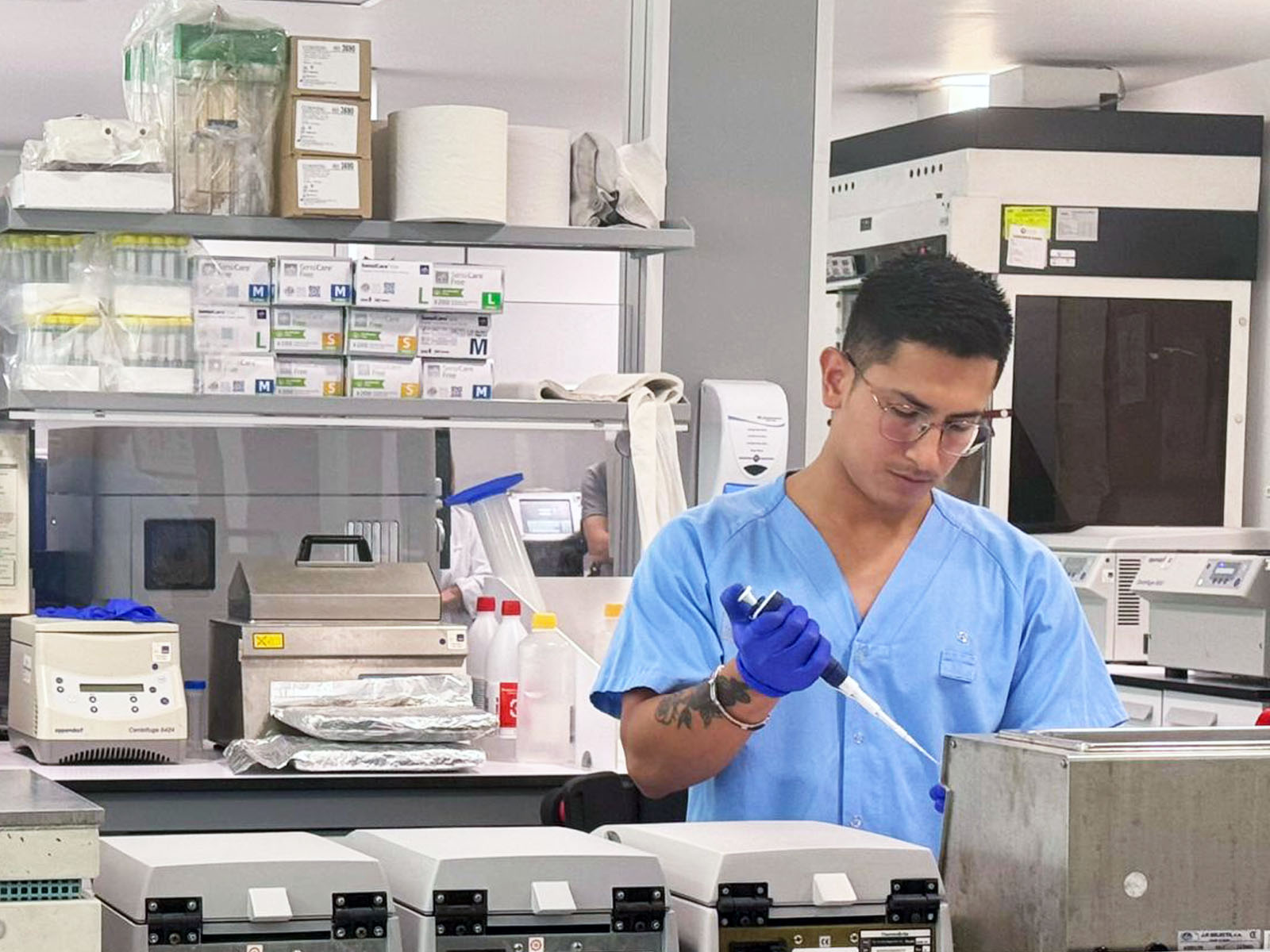


- This groundbreaking test helps oncologists determine which breast cancer patients should be treated with bisphosphonates to improve their prognosis and survival.
- The MAF Test® could benefit more than 30,000 patients per year.
- The clinical-scientific results of the MAF Test® have been published in high-impact journals such as The Lancet Oncology, the Journal of the National Cancer Institute and Nature Cell Biology.
- The MAF Test® is now available in Spain, Portugal, Italy, South Africa and the UK.
The IRB Barcelona spin-off Inbiomotion announces that the MAF Test® will be available as of today in the Hospital del Mar (Barcelona), the Clínic Barcelona Comprehensive Cancer Center, the centres belonging to HM Hospitales in the Autonomous Community of Madrid, and the International Breast Cancer Center/ Pangaea Oncology (Barcelona). These are the first public and private centres in Spain to incorporate this pioneering test for breast cancer patients. Widespread roll-out of the MAF Test® could increase the survival rate for nearly 80% of the 33,000 early-stage breast cancer patients diagnosed each year in Spain, according to 2024 estimates from the Spanish Society of Medical Oncology (SEOM).
The MAF Test® predicts the prognosis of breast cancer patients and helps oncologists identify those in whom metastasis could be prevented and who might benefit from adjuvant treatment with bisphosphonates (drugs commonly used to treat osteoporosis). Furthermore, the MAF Test® identifies patients whose prognosis would worsen if treated with bisphosphonates, thereby preventing their exposure to unnecessary treatments that would not provide benefit.
Breast cancer is the most common form of cancer among women, with over 2 million new cases diagnosed worldwide each year. Approximately 1 in 8 women will develop breast cancer during their lifetime, and of these, between 15% and 20% may go on to develop metastasis. The ability to identify patients at higher risk of recurrence and to personalize their treatment is vital for improving both their survival and quality of life.
This announcement follows a recent publication in Nature Cell Biology that provides key data to elucidate the biology of the MAF biomarker. In that study, a team at IRB Barcelona led Dr. Roger Gomis, ICREA researcher and co-founder of Inbiomotion, revealed the mechanism by which MAF gene amplification increases the risk of metastasis in breast cancer. This discovery is a crucial step towards understanding the molecular basis of metastasis and has significant clinical implications for the future treatment of the disease.
Dr. Roger Gomis, founder of Inbiomotion commented, "It's fantastic news to announce the adoption of the MAF Test in leading hospital centres, which reinforces our commitment to improving cancer care within the healthcare system. This announcement represents a significant step forward in increasing diagnostic capabilities and enhancing clinical outcomes for early-stage breast cancer patients. We eagerly anticipate continued collaboration with these hospitals, aiming to empower healthcare professionals and achieve a positive, lasting impact on people's lives."
“It is very exciting to see how pioneering research developed in Barcelona is translating into tangible improvements for our patients. Having the possibility to perform the MAF Test at our hospital will allow us to more easily identify patients at high risk of metastasis and tailor treatments to improve their survival," said Dr. Sònia Servitja, Medical Oncologist and Head of the Breast Cancer Section at the Oncology Department of Hospital del Mar (Barcelona).

As part of the process, Dr. Servitja tested one of her patients, Aliki Nikolaou, who was very thankful for the insights into her specific case: "I think that regardless of my result, having more information about your case and personalizing the treatment is crucial. For me, research means precisely that: gaining more knowledge, feeling secure in your choices, and ultimately, being here today — thanks to science."
Finally, Dr. Aleix Prat, Director of the Clínic Barcelona Comprehensive Cancer Center and Chair of the Precision Oncology Innovation at the University of Barcelona, concluded: “Precision oncology requires integrating clinically validated biomarkers that help us tailor treatments to the biological risk of each tumor. The MAF Test is an excellent example of how biomedical research can generate useful, accessible tools that improve decision-making and quality of care. Its implementation in hospitals represents another step toward more effective, safer, and personalized medicine.”
Access the full press release: https://www.inbiomotion.com/news.html
About IRB Barcelona
The Institute for Research in Biomedicine (IRB Barcelona) pursues a society free of disease. To this end, it conducts multidisciplinary research of excellence to cure cancer and other diseases linked to ageing. It establishes technology transfer agreements with the pharmaceutical industry and major hospitals to bring research results closer to society, and organises a range of science outreach activities to engage the public in an open dialogue. IRB Barcelona is an international centre that hosts 400 researchers and more than 30 nationalities. Recognised as a Severo Ochoa Centre of Excellence since 2011, IRB Barcelona is a CERCA centre and member of the Barcelona Institute of Science and Technology (BIST).