Images
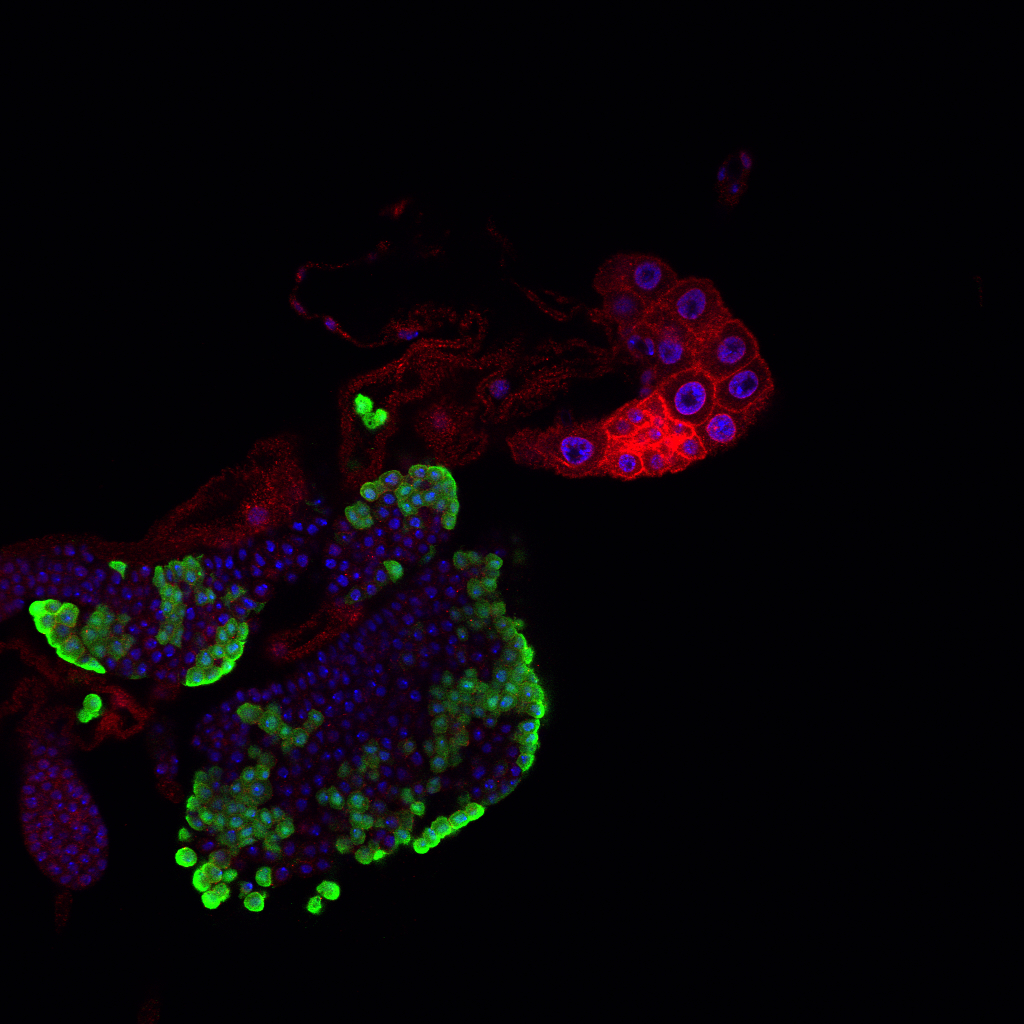
- The study, conducted on the vinegar fly Drosophila melanogaster, shows that macrophages detect nutritional stress caused by a high-sugar diet and send a signal to the endocrine system to delay development.
- This mechanism delays metamorphosis, giving the larvae time to grow and reach a functional, well-proportioned adult stage.
- Published in Current Biology, the study opens up new questions about how nutrition, immunity, and hormones coordinate during development.
Diets rich in sugars and fats are associated with metabolic disorders such as insulin resistance, chronic inflammation, and diabetes. During development, these imbalances can have a particularly significant impact, as the body must coordinate growth, maturation, and hormone production.
A study conducted in Drosophila melanogaster, led by Dr. Sergio Juárez-Carreño and Dr. Marco Milán at IRB Barcelona, now reveals that macrophages—cells of the immune system—play a key role in this communication. In response to a high-sugar diet, these cells produce Dpp, a molecule homologous to human BMP2/4 proteins, which acts on the endocrine organ responsible for producing ecdysone, the steroid hormone that triggers metamorphosis.
Macrophages as nutritional status sensors
While macrophages are known for their role in the immune response, they also act as sensors of the body's physiological state. In contexts such as obesity and insulin resistance, for example, they contribute to metabolic inflammation and lipid accumulation in various tissues.
To this, a previously undescribed function can now be added, namely the modulation of hormone production during development. In larvae fed a high-sugar diet, macrophages increase the production of Dpp. This signal travels to the prothoracic gland and temporarily reduces ecdysone production, delaying the transition from larva to pupa.
"We knew that macrophages respond to metabolic stress, but not that they could regulate steroid hormone production. Our results show that these cells connect external nutritional signals with the physiology of the entire organism," explains Dr. Sergio Juárez-Carreño, first author of the study and currently a group leader at the Andalusian Center for Developmental Biology.
Buying time to grow
Under normal conditions, Drosophila larvae complete this developmental phase in about five days. On a high-sugar diet, the process is extended to six or seven days. According to the authors, this delay helps buffer the impact of that diet.
When the researchers blocked the Dpp signal produced by the macrophages, the larvae partially reduced the delay but reached a smaller size. This suggests that the immune response helps compensate for the impact of the high-sugar diet on growth, allowing the organism to buy time and reach adulthood in better condition.
"The immune system does not only respond to infections or damage. It also acts as an internal surveillance system, capable of adjusting the pace of development when nutritional conditions are sub-optimal," notes Dr. Marco Milán, ICREA researcher and head of the Development and Growth Control laboratory at IRB Barcelona.
Nutrition, hormones, and development
Drosophila melanogaster is a widely used model in biomedical research to study fundamental processes of development, metabolism, and hormonal regulation. In this system, the transition from larva to pupa makes it possible to analyze how steroid hormones coordinate major physiological changes during development. Furthermore, BMP proteins are evolutionarily conserved and have been linked to metabolic processes and insulin resistance in mammals.
While the study does not establish an equivalent mechanism in humans, the findings raise questions about how diets rich in sugar, obesity, or insulin resistance might influence hormonal regulation during stages of growth. In future projects, Dr. Juárez-Carreño will focus on analyzing the impact of excess sugar on the adult organism.
This work received funding from the Ministry of Science, Innovation and Universities, the Generalitat de Catalunya through a Beatriu de Pinós fellowship, the Horizon 2020 Marie Skłodowska-Curie program, the CERCA programme, and the Severo Ochoa accreditation.
Related article:
A systemic role of macrophage-derived BMP2/4 homolog Dpp in inhibiting sterol hormone synthesis under dietary stress
Sergio Juarez-Carreño & Marco Milán
Current Biology (2026) DOI: 10.1016/j.cub.2026.05.028
About IRB Barcelona
The Institute for Research in Biomedicine (IRB Barcelona) pursues a society free of disease. To this end, it conducts multidisciplinary research of excellence to cure cancer and other diseases linked to ageing. It establishes technology transfer agreements with the pharmaceutical industry and major hospitals to bring research results closer to society, and organises a range of science outreach activities to engage the public in an open dialogue. IRB Barcelona is an international centre that hosts 400 researchers and more than 30 nationalities. Recognised as a Severo Ochoa Centre of Excellence since 2011, IRB Barcelona is a CERCA centre and member of the Barcelona Institute of Science and Technology (BIST).