
Images
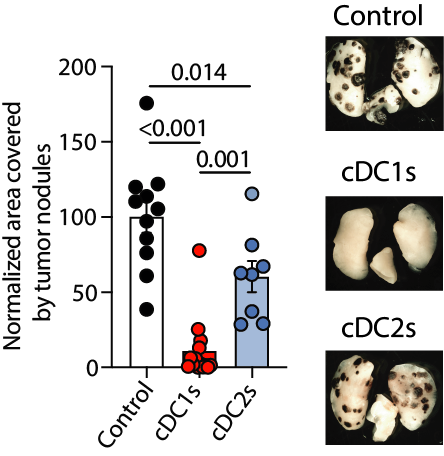
- A study led by the Carlos III National Center for Cardiovascular Research (CNIC), in collaboration with IRB Barcelona, identifies the dendritic cell subtype most effective at generating immune memory against cancer.
- This discovery is significant because most current therapies focus on boosting existing T cell immunity, but not on generating new memory responses.
- The approach, published in the journal Nature Communications, could have applications in preventing metastasis.
Scientists at the Centro Nacional de Investigaciones Cardiovasculares Carlos III (CNIC), working in collaboration with IRB Barcelona, have discovered a new immunotherapy strategy that reduces cancer recurrence in mouse experimental models.
The study, published in Nature Communications, shows that a specific subtype of immune cell—type I dendritic cells— is especially effective at activating a strong immune response and generating immune memory against cancer.
Dendritic cells act as sentinels of the immune system, presenting tumor antigens to T lymphocytes to initiate an immune response against malignant cells. However, there are multiple dendritic cell subtypes, and until now it was unclear which is the most efficient at generating a sustained, protective response to tumors.
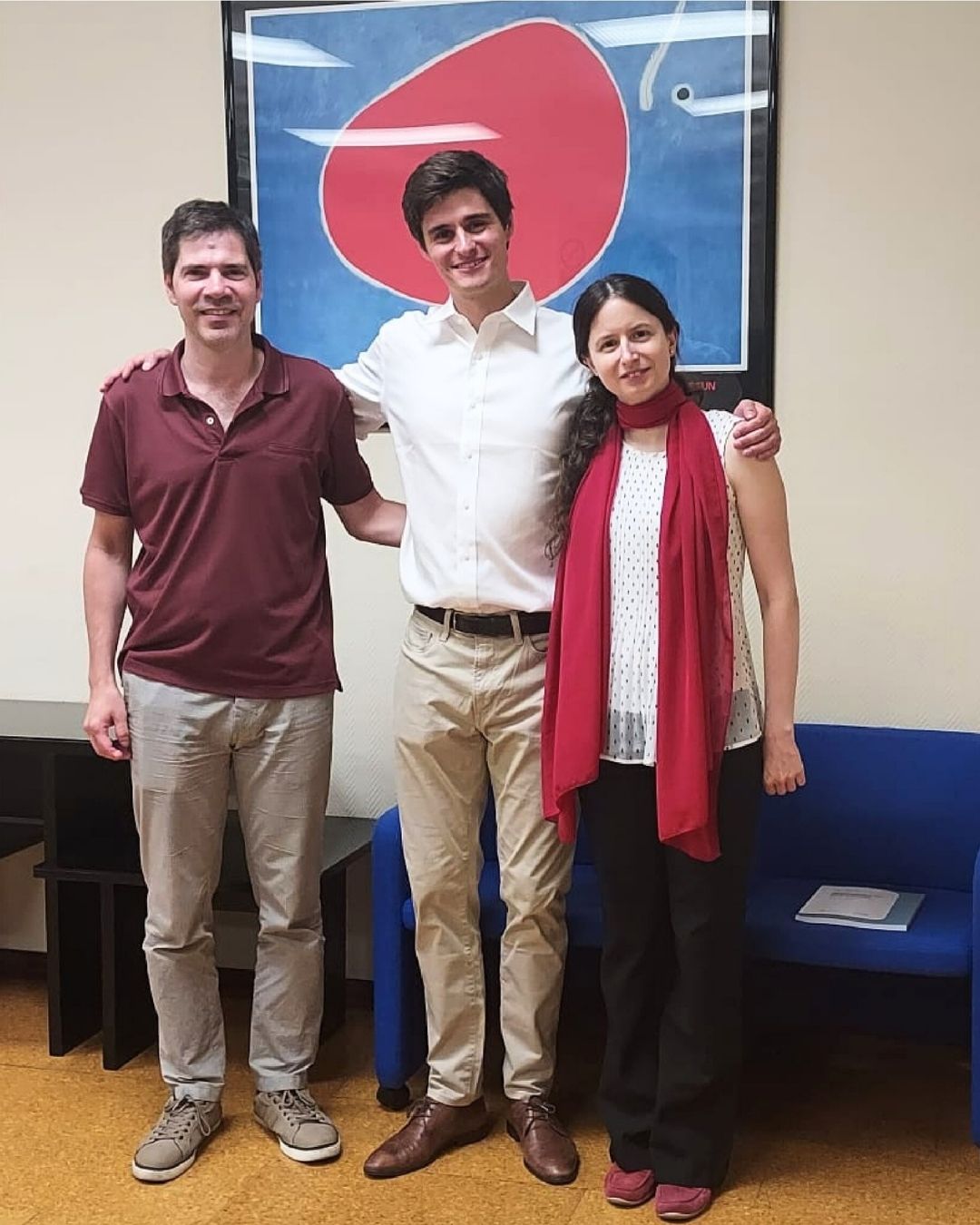
First author Ignacio Heras-Murillo, from CNIC, explains: “The finding is important because most current therapies focus on enhancing the immune response that is already in place. In contrast, this dendritic cell-based immunotherapy aims to induce a new, specific immune response against the tumor.”
Describing the strategy, study co-supervisor Dr. Stefanie Wculek—formerly at the CNIC and now at IRB Barcelona—explains that dendritic cells are extracted from the cancer-bearing mouse, loaded in the lab with tumor-derived antigens, and then reintroduced into the animal to activate specific T lymphocytes. The results show that type I dendritic cells not only trigger an immediate response against the primary tumor but also induce long-lasting immune memory capable of preventing tumor relapse.
CNIC scientist Dr. David Sancho, who led the study, adds that immunotherapy with type I dendritic cells presenting the tumor antigen triggers an immune memory response that prevents the growth of a second, similar tumor. In other words, the treatment helps prevent relapse in the mouse models. Further studies will be needed to assess the potential of this approach for preventing metastasis and its possible synergy with other antitumor therapies.
The study was supported with funding from the CNIC, the Spanish Ministry of Science de Ciencia, Innovación y Universidades (MICIU), the Agencia Estatal de Investigación, the European Union NextGenerationEU/PRTR, the Comunidad de Madrid, the “la Caixa” Foundation, the Asociación Española Contra el Cáncer, and Worldwide Cancer Research (25-0080).
Reference article
Immunotherapy with conventional type-1 dendritic cells induces immune memory and limits tumor relapse. Heras-Murillo I, Mañanes D, Munné P, Núñez V, Herrera J, Catalá-Montoro M, Alvarez M, Del Pozo MA, Melero I, Wculek SK, Sancho D. Nature Communications 2025 Apr 9;16(1):3369. DOI: 10.1038/s41467-025-58289-1. PMID: 40204706.
About IRB Barcelona
The Institute for Research in Biomedicine (IRB Barcelona) pursues a society free of disease. To this end, it conducts multidisciplinary research of excellence to cure cancer and other diseases linked to ageing. It establishes technology transfer agreements with the pharmaceutical industry and major hospitals to bring research results closer to society, and organises a range of science outreach activities to engage the public in an open dialogue. IRB Barcelona is an international centre that hosts 400 researchers and more than 30 nationalities. Recognised as a Severo Ochoa Centre of Excellence since 2011, IRB Barcelona is a CERCA centre and member of the Barcelona Institute of Science and Technology (BIST).