

Research information
Background
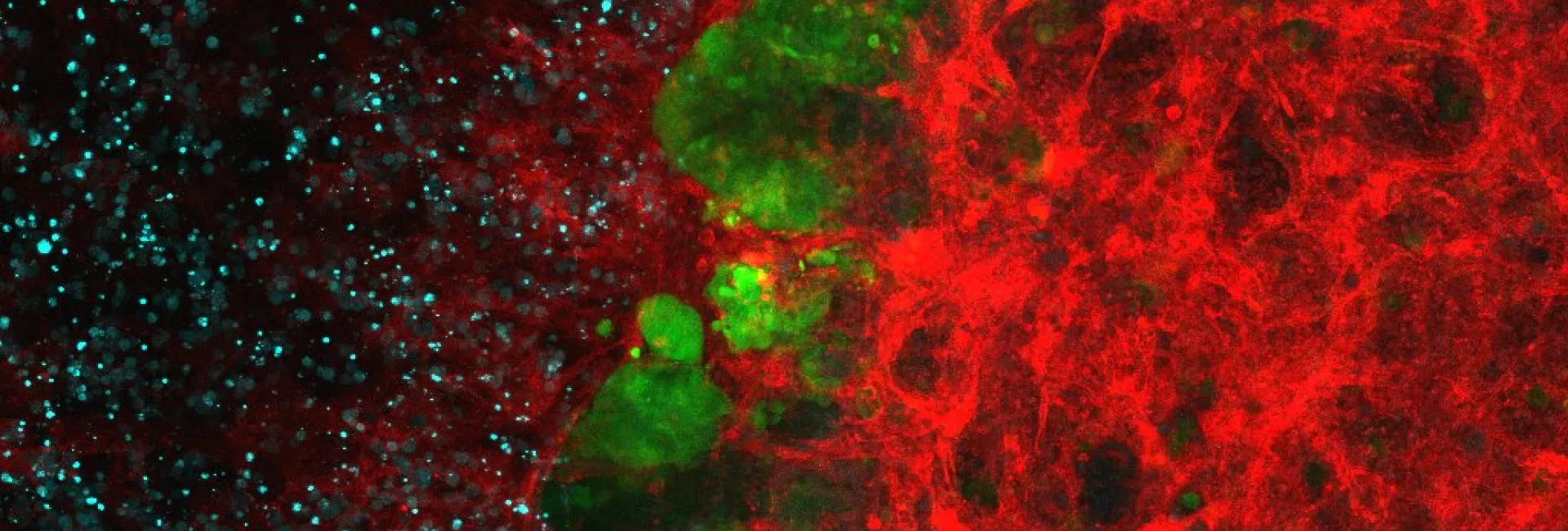
Cancer is driven by genetic mutations, but mutations alone cannot explain why some cells become cancerous while others do not, why tumors evolve differently, or how they escape immune control. Growing evidence points to the importance of non-genetic mechanisms that regulate cellular plasticity and interactions with the surrounding environment in shaping cancer development.
Inflammation plays a particularly important role in these processes. While essential for tissue repair and immune protection, inflammatory responses can also create conditions that favor cancer initiation and progression. Understanding what determines these contrasting outcomes is a central challenge in cancer biology.
Our laboratory investigates how inflammation and epigenetic plasticity interact to shape cell behavior and tissue responses in cancer, and how broader physiological conditions, such as aging, influence these processes. Focusing on inflammation-driven malignancies, we seek to uncover how non-genetic mechanisms operating across individual cells, local tissue ecosystems, and the whole organism determine whether inflammatory responses support tissue regeneration and immune protection or promote cancer initiation, evolution, and immune escape.
Research interests
Our laboratory investigates how non-genetic mechanisms govern cancer initiation, evolution, and immune escape, with a particular focus on the interplay between inflammation, epigenetic plasticity, and local and organism-wide environmental contexts.
We study how individual cells interpret inflammatory signals, how interactions between different cell types shape tissue behavior, and how organism-wide conditions, such as aging, influence cancer susceptibility and progression.
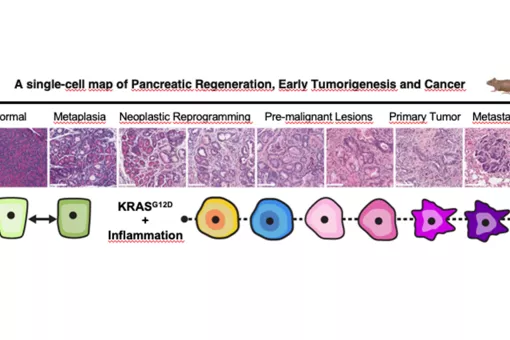
Focusing on pancreatic and liver cancers, two major clinical challenges for which more effective early intervention and treatment strategies are urgently needed, we integrate advanced mouse models, functional genetics, single-cell and spatial technologies, and human samples to investigate these processes across three interconnected biological scales.
Our ultimate goal is to identify mechanisms that distinguish physiological tissue repair and immune protection from cancer-promoting responses, opening new opportunities for cancer prevention, early intervention, and treatment.
Research lines
- Cell-intrinsic scale: How do cells interpret their environment during cancer initiation and evolution?
- Cells carrying cancer-associated mutations do not all behave in the same way. Their capacity to change identity and function, known as cellular plasticity, is shaped by epigenetic programs that regulate gene expression without altering the underlying DNA sequence.
- We investigate how epithelial cells carrying cancer-associated mutations sense and respond to inflammatory signals, and why some engage in normal tissue repair while others acquire cancer-promoting properties. By identifying the molecular mechanisms that drive these divergent cell states, we aim to understand how cancer-associated cellular diversity emerges, how it shapes tumor evolution, and how it might be therapeutically redirected.
- Tissue-level scale: How do cellular interactions shape cancer development and immune escape?
- Cancer cells do not evolve in isolation. They constantly communicate with immune cells and other components of their surrounding tissue, forming complex ecosystems that can either restrain or support tumor development.
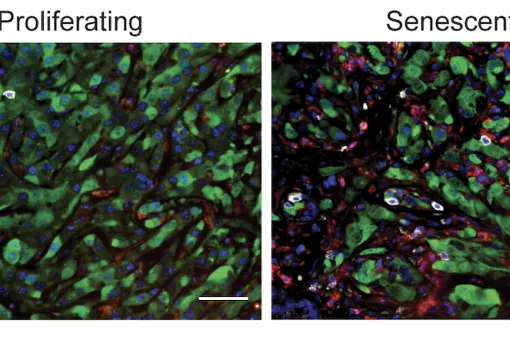
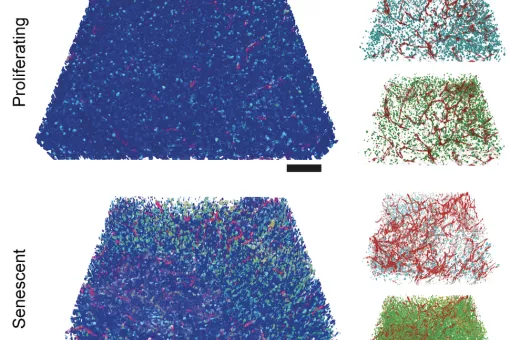
- We investigate how cell–cell interactions that normally sustain tissue repair and immune surveillance become altered during cancer initiation and progression. Particular emphasis is placed on understanding how immune cell plasticity influences the behavior of neighboring premalignant and malignant cells, and how processes such as cellular senescence can reshape immune recognition.
- Our goal is to uncover how otherwise protective tissue responses become diverted toward tumor promotion and immune escape, and to identify ways to selectively target pathogenic inflammatory responses while restoring effective anti-tumor immunity.
- Organismal scale: How do systemic inflammatory cues influence cancer susceptibility and evolution?
- The biological environment in which cancer develops extends beyond the affected tissue. Chronic inflammatory conditions and communication between organs can alter immune responses throughout the body, potentially influencing whether cancers emerge, progress, or spread.
- We investigate how these organism-wide inflammatory states reshape local tissue ecosystems and affect the behavior of normal and cancerous cells. A particular focus is the interplay between aging, cellular senescence, and systemic inflammation, as well as the consequences of these processes for cancer susceptibility and metastatic progression.
- By connecting changes at the organismal level with the cellular and tissue mechanisms studied in our other research lines, we aim to understand how the broader physiological environment influences cancer development and identify opportunities to intervene.
Selected publications
Projects
Plan de Generación de Conocimiento 2021. Ministerio de Ciencia e Innovación.
PID2021-128102OA-I00. Dissecting and targeting early epigenetic programs in pancreatic cancer (PRE-CAN)

SGR-Cat 2021
Grup de Recerca emergent (SGR-Cat 2021) del Departament de Recerca i Universitats. Agència de Gestió d'Ajuts Universitaris i de Recerca (AGAUR). Referència: 2021 SGR 01586.

Redes de investigación 2022
RED2022-134296-T. RAS oncoproteins: from basic science to therapeutic applications (RAS-CURE). This project is a consortium, headed by Dr. David Santamaría from CIC Salamanca.

US DoD Pancreatic Cancer Research Program Idea Development Award
Award Number: W81XWH-22-1-0813. Log Number: PA210096. Epigenetic Licensing of Pancreatic Cancer Metastasis.

II Ayuda de Investigación en Cáncer FERO-ASEICA
BFERO2021.06. Intercepting onco-inflammatory networks in pancreatic cancer.

La Caixa Foundation Junior Leader Incoming
LCF/BQ/PI20/11760006. Dissecting and targeting cell and tissue fate dysregulation in pancreatic cancer.

TRANSCAN 3 - JTC 2022
"Systemic immunological determinants of tumor evolution and therapy response in BRCA-mutated pancreatic cancer" financiado por Fundación Científica Asociación Española Contra el Cáncer. Referencia: TRNSC235656ALON.

"Systemic immunological determinants of tumor evolution and therapy response in BRCA-mutated pancreatic cancer" financiado por la Unión Europea – NextGenerationEU. Referencia: TRANSCAN2022-784-028.


Policies
Honors & Awards
- 2021 Blavtanik Regional Award for Young Scientists, Winner in Life Sciences category (USA)
- 2021 Hipatia Prize for Young Talent in Science, Finalist (2nd position) (Spain)
- 2021 Bentejui Young Award, Winner in Professional category, Bentejui Youth Association (Spain)
- 2020 La Caixa Postdoctoral Junior Leader Fellowship, La Caixa Foundation (Spain).
- 2018 Benjamin F. Trump Award for Scientific Research Excellence, Aspen Cancer Conference (USA)
- 2014 Ramón Areces Foundation Postdoctoral Fellowship (Spain).
- 2014 Extraordinary Doctorate Award, Autonomous University of Madrid (Spain).
- 2010 Society for Melanoma Research (SMR) Travel Grant (USA).
- 2010 EMBO Short-Term Fellowship, European Molecular Biology Organization (EMBO)
- 2008 National Graduate Research Fellowship (FPU), Spanish Ministry of Education (Spain).
- 2009 Biomedical Sciences Schools’ Valedictorian, Complutense University of Madrid (Spain).
- 2008 National Award in Pharmaceutical Sciences (3rd pos), Spanish Ministry of Education (Spain).
- 2007 Undergraduate Research Fellowship (Beca-Colaboración), Spanish Ministry of Education (Spain).
Leadership & Science Outreach
- 2021 Invited Speaker at the Commemorative Act of International Women's Day, University of La Laguna (Tenerife, Spain).
- 2021 Co-organizer and participant of Spanish Association for Cancer Research (ASEICA)’s event Conócelas that connected 150 women scientists with >6500 students across Spain.
- 2018 Co-organizer and moderator of Faculty Panel, Women in Science & Medicine Series, Memorial Sloan-Kettering Cancer Center (New York, USA).
*Write-up in Scientific American blog: “Today’s Paths to Leadership: A Different Perspective”. (2018): Mayle A, Alonso-Curbelo D, Neill US. Lifebeyond the Laboratory Bench. goo.gl/i1fmHY - 2017 Co-leader of Fundraising Team, “Scientists –ReSearching for a Cure” team (New York, USA) at PurpleStride initiative from the Pancreatic Cancer Action Network (PanCAN).