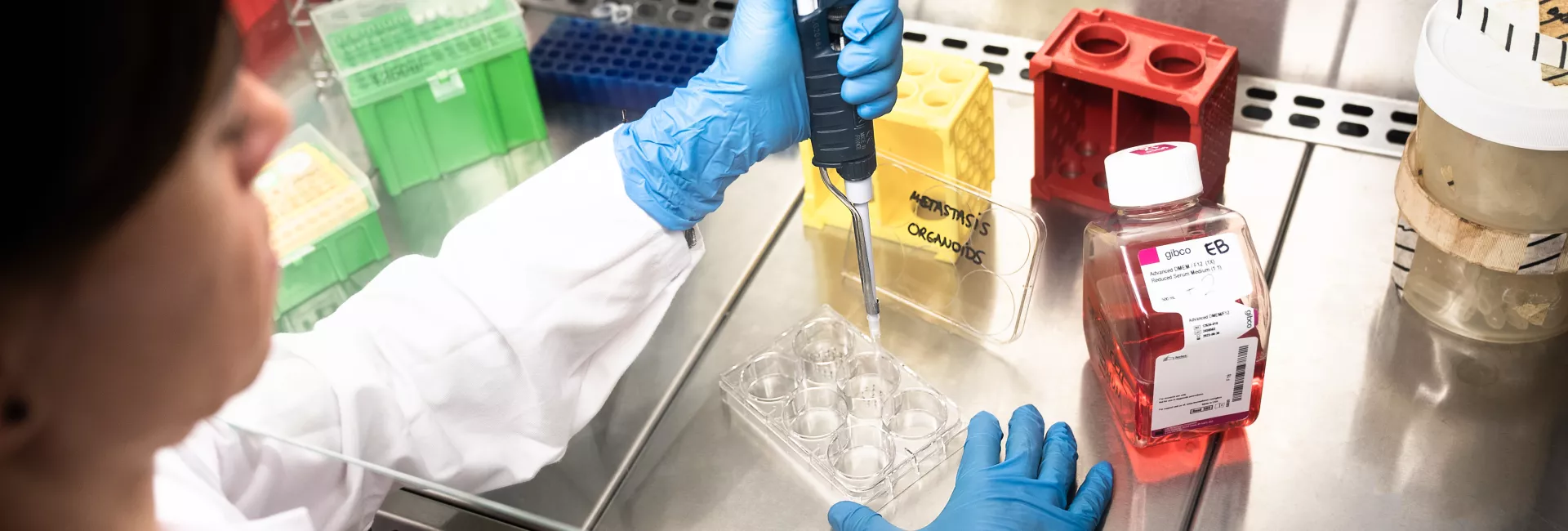
Images
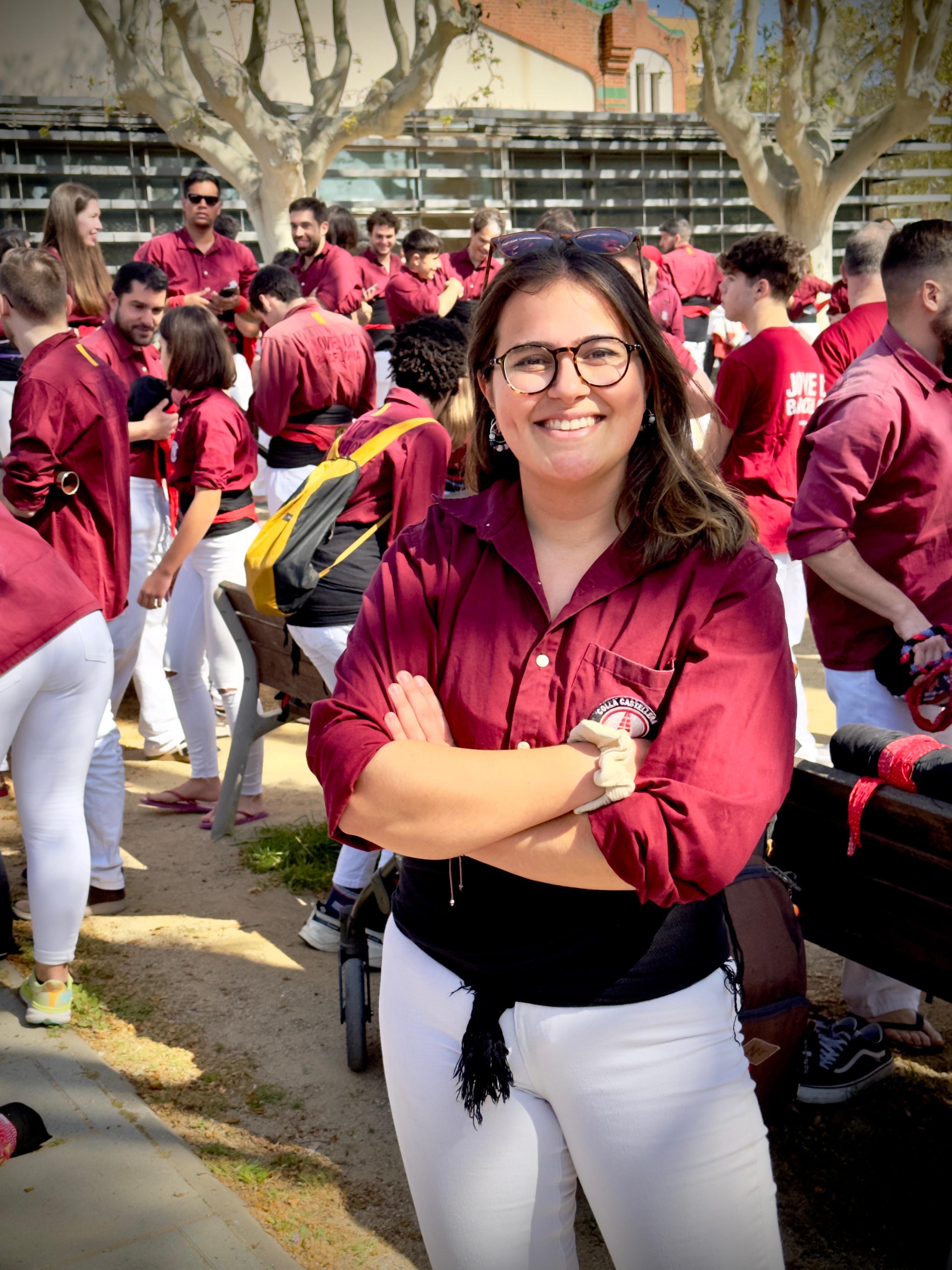
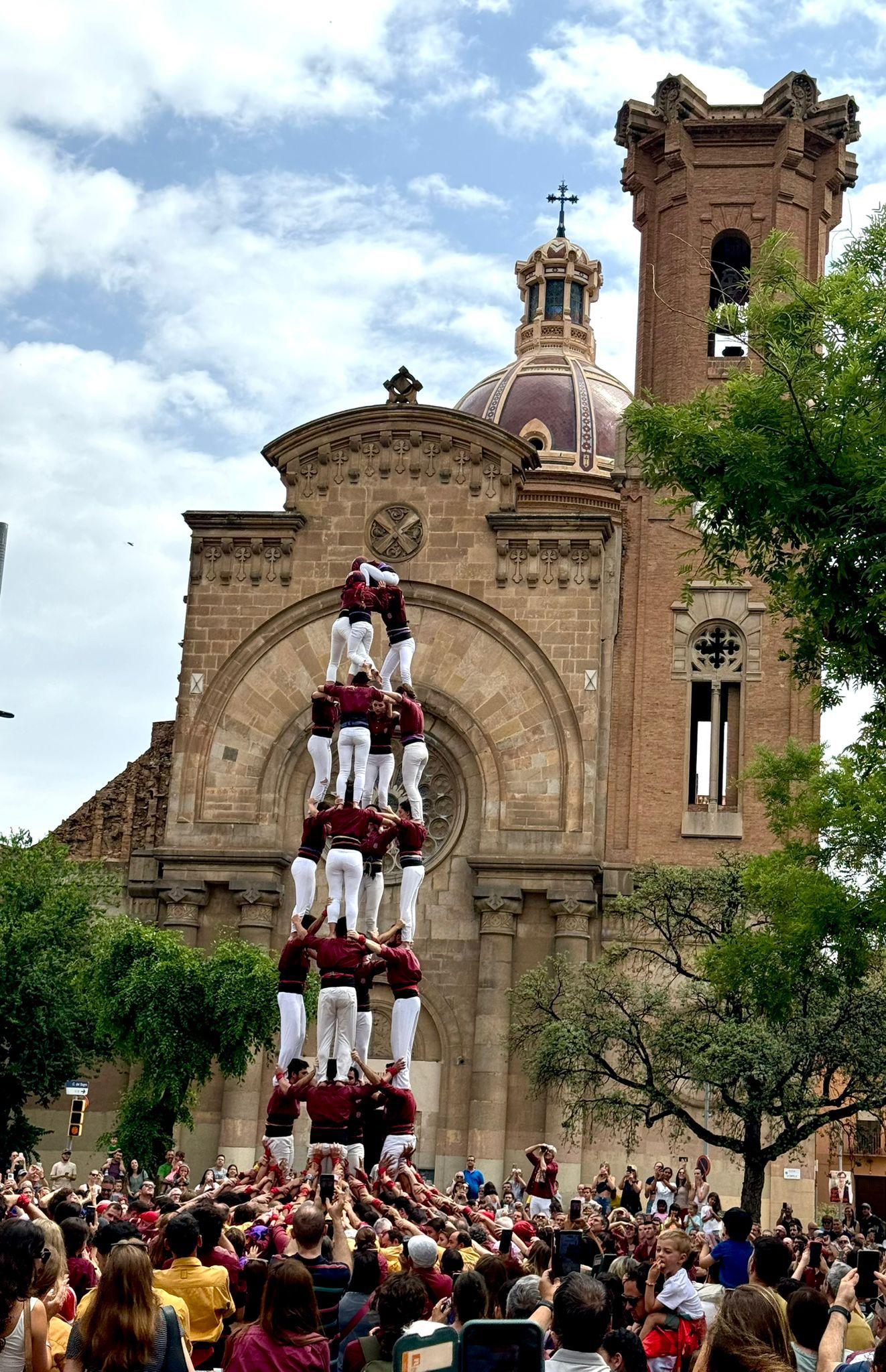
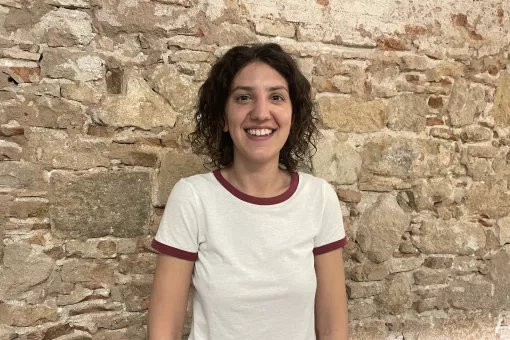
We met up with Mireia Artola, a young researcher who has discovered a powerful connection between her work as a PhD student in IRB Barcelona’s Colorectal Cancer lab and her passion for castells—the human towers traditionally built in Catalonia. She told us about her academic journey, her involvement with the Colla Castellera Jove de Barcelona (a colla is a team that builds castells), and a recent fundraising initiative she led in support of IRB Barcelona’s “Metastasis Challenge” campaign.
Hi Mireia, tell us a bit about yourself.
I'm 25 and currently doing my PhD in Dr. Eduard Batlle’s research group at IRB Barcelona, which focuses on colorectal cancer. I'm between my second and third year now and feeling full of energy and really happy. I knew back in university that I wanted to go into research, and my Master’s experience just confirmed it.
In your free time, you're a castellera. How did your connection with the Colla Castellera Jove de Barcelona begin?
I started in 2019, just before the pandemic. A school friend encouraged me to go along. I’d seen castells with my parents before, but I never imagined being part of one myself. But from the very first time I went, I fell in love with the atmosphere, the people, the teamwork… I got so hooked that when I spent some time in London I even joined a colla there for a while!
What does building castells mean to you?
For me, it’s the perfect metaphor for what we do in science. In a castell, everyone has a single objective, working together to build something strong and safe. In science, our castell is discovery. I’m part of the piña—that’s the base of the tower. Without the piña, there are no castells, just like there are no discoveries without a research team.
Let’s talk about the charity event your colla organized last month. How did the idea come about?
I wanted to take advantage of the strong connection we have with the Sant Andreu neighbourhood. I suggested organizing an event to raise funds in support of cancer research at IRB Barcelona. I pitched it to the group after a rehearsal, and everyone was really on board. We put together a logistics team of six or seven people, and around fifty members of the colla actively contributed.
Tell us more...
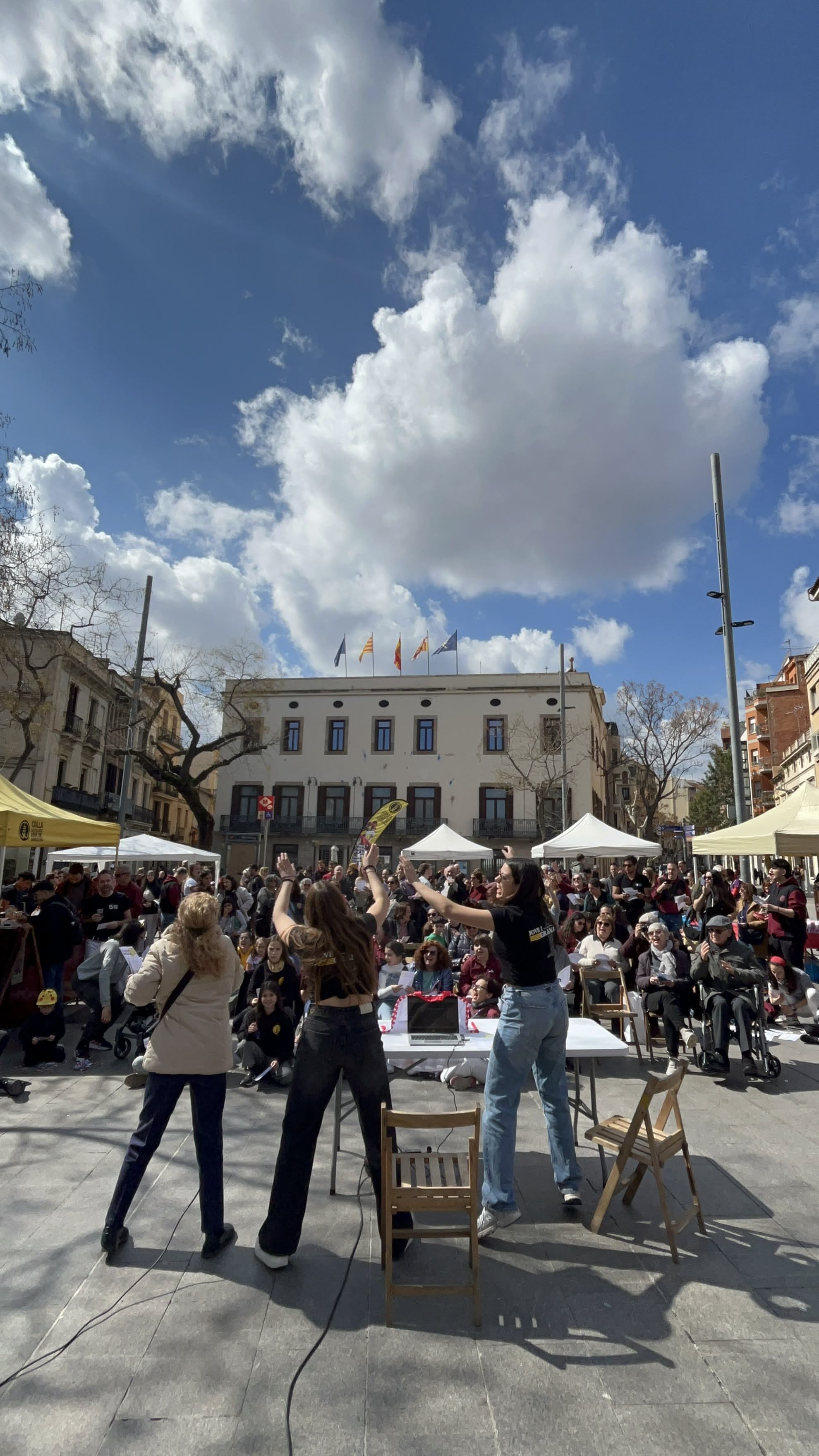
We held the charity event in Orfila Square on March 15, from 10 a.m. to 7 p.m. There was a castells workshop, face painting, games, a solidarity market, second-hand stalls, a chocolate stand, raffles every hour, musical bingo, a charity lunch, and much more. It was a full, family-friendly day, and really special. Organizing it was a huge logistical effort though.
Local businesses got involved in the raffle and other parts of the event. How did you get them on board?
I reached out to many by email from my IRB Barcelona address. I explained the cause and shared links to the Metastasis Challenge. The response was amazing—people were really enthusiastic, even before we even had an official poster! Lots of local shops and residents got involved.
How many people came, and how much did you raise?
It’s hard to say exactly how many attended, but we’re talking hundreds. We raised around €3,400, which far exceeded our expectations. I hadn’t set a specific goal, but I said I’d be happy with €1,000—and we tripled it!
Will the event be repeated in the future?
Yes, this year was a bit of a trial run. The foundation is there now—contacts, permits, logistics... It was a meaningful but demanding project, both personally and collectively. But I’d definitely like to do it again.
What’s your take on the level of solidarity in our society?
I think it's improving, though that also reflects a sad truth: diseases like cancer are increasingly common. People are more aware now because many have close experiences with it. And they know there is a lack of funding. So yes, the solidarity is there, but it’s responding to a growing need.
What would you say to someone thinking of supporting research through a charity initiative?
I’d say go for it—whether it's organizing an event or making a donation. Every little bit helps. This day was a deeply rewarding personal project outside the lab, and it made me feel useful in a different way. It was also a collective experience—seeing how people responded was moving. Every euro matters, every gesture counts. Just like in castells, nothing gets off the ground without the support of a lot of people.
Donating—even a small amount—is one of the most genuine acts we can make as a society. Change begins with small steps—and every step counts.
During our conversation with Mireia, her enthusiasm and energy were contagious and inspiring. In addition to building castells with her colla, she’s helping to build bridges between science and society—with passion, drive, and a wholehearted commitment to making a difference.
About IRB Barcelona
The Institute for Research in Biomedicine (IRB Barcelona) pursues a society free of disease. To this end, it conducts multidisciplinary research of excellence to cure cancer and other diseases linked to ageing. It establishes technology transfer agreements with the pharmaceutical industry and major hospitals to bring research results closer to society, and organises a range of science outreach activities to engage the public in an open dialogue. IRB Barcelona is an international centre that hosts 400 researchers and more than 30 nationalities. Recognised as a Severo Ochoa Centre of Excellence since 2011, IRB Barcelona is a CERCA centre and member of the Barcelona Institute of Science and Technology (BIST).