Images
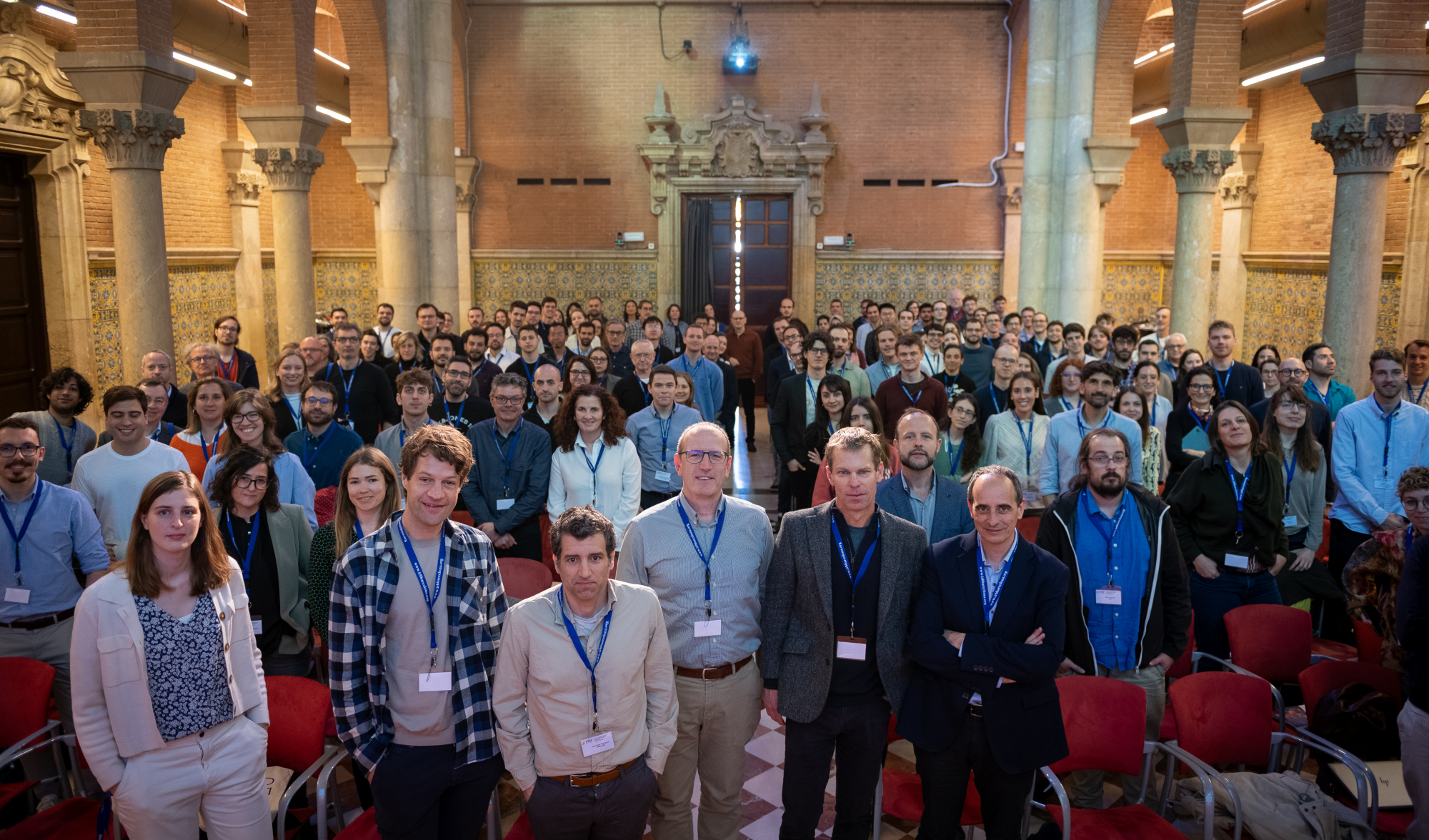
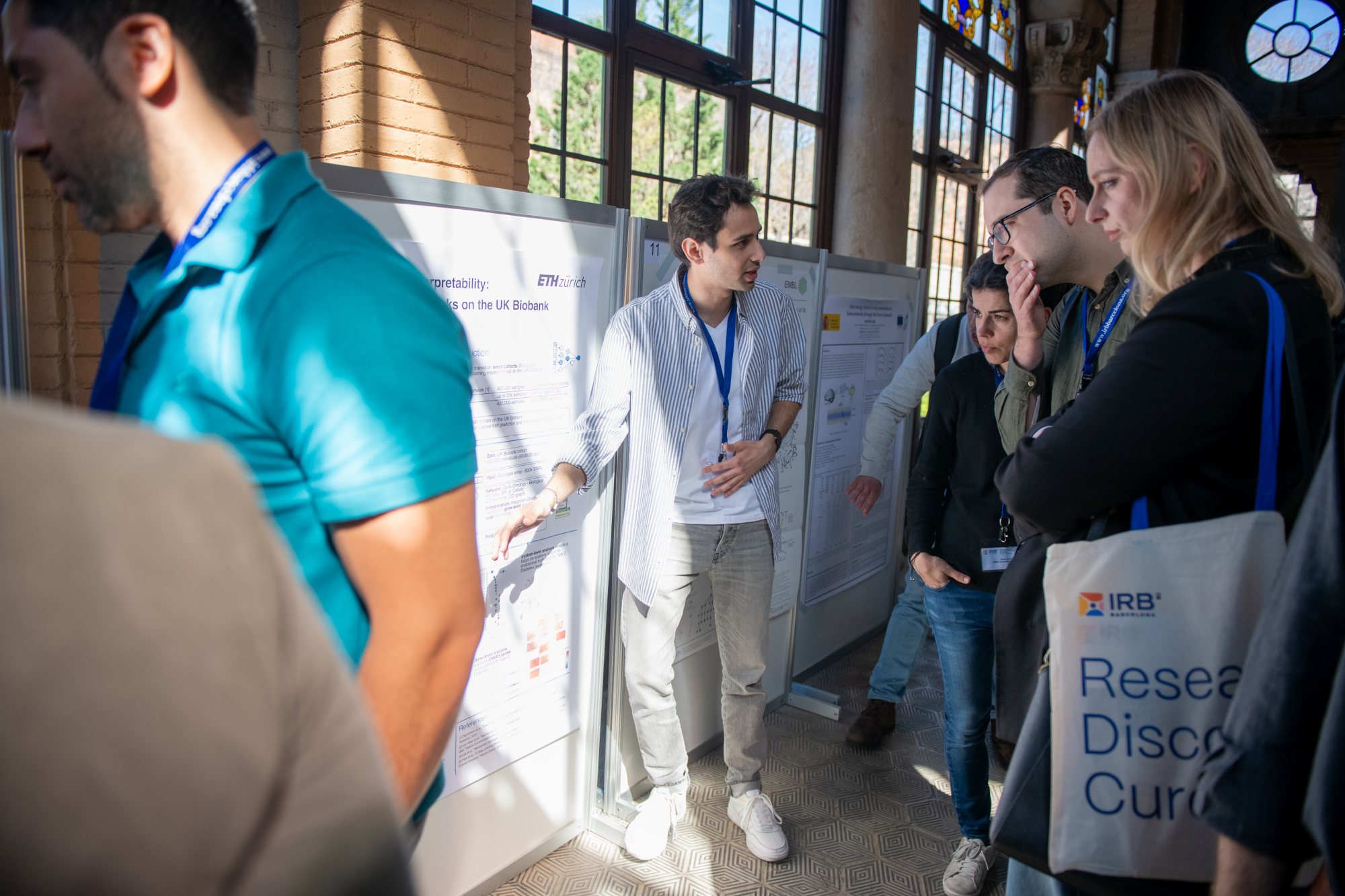
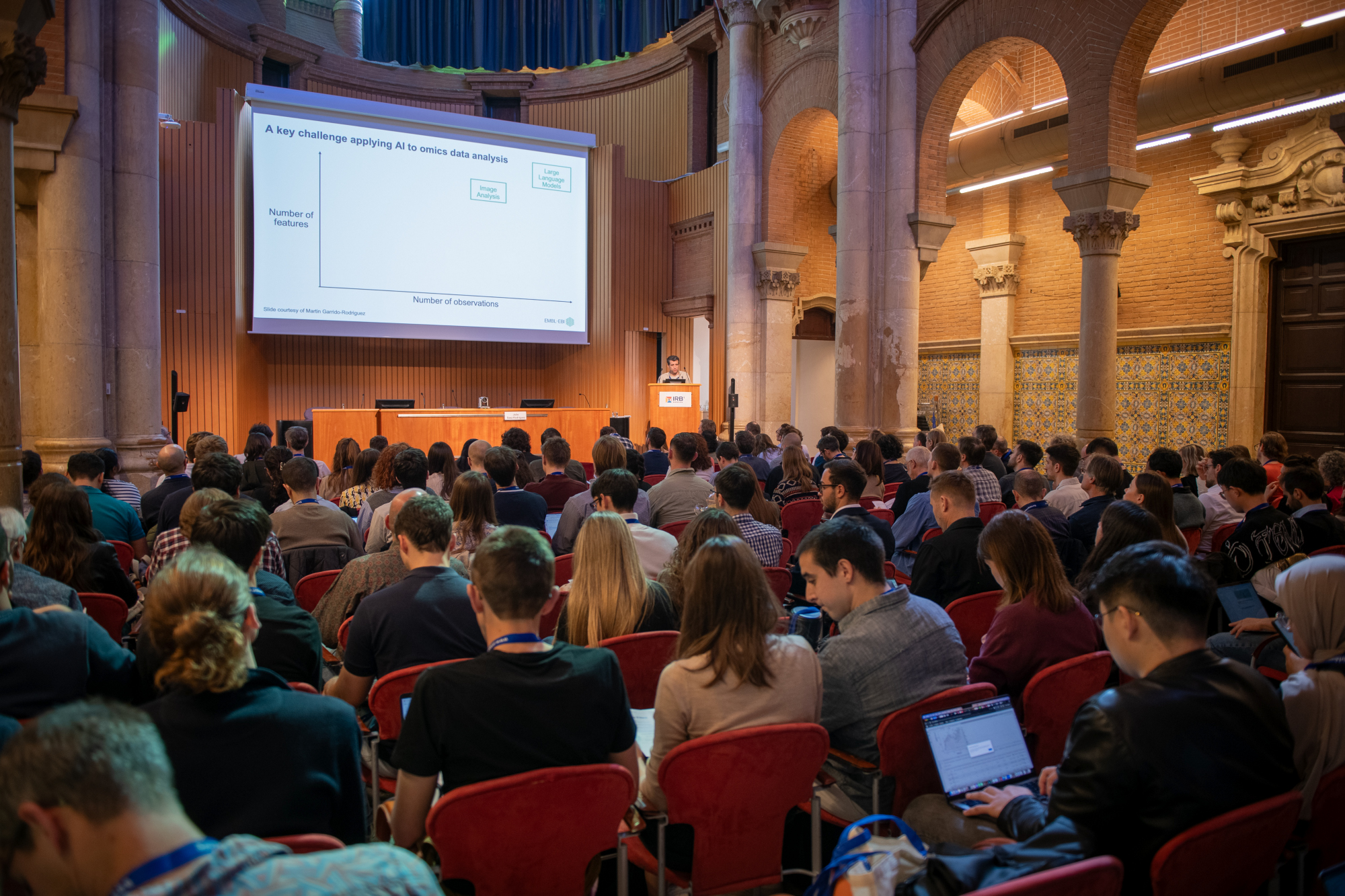
- The event, held in the emblematic Casa de Convalescència, was supported by the BBVA Foundation and welcomed 150 international attendees.
- The conference addressed how advanced AI models and generative AI techniques are transforming drug discovery, opening new perspectives in biomedicine, and bringing these advances closer to clinical practice.
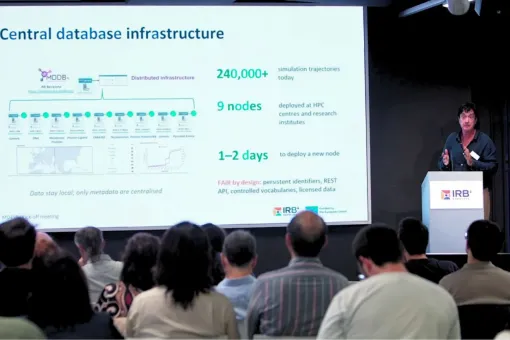
Between 31 March and 2 April, IRB Barcelona, supported by the BBVA Foundation, hosted the 43rd Barcelona BioMed Conference, entitled "AI in Drug Discovery and Biomedicine". Held in the emblematic Casa de Convalescència in Barcelona, and organized by Dr. Patrick Aloy (IRB Barcelona) and Dr. Trey Ideker (UC San Diego, US), the conference gathered 150 international researchers to explore the potential of artificial intelligence (AI) to transform Drug Discovery.
The technological revolution that is transforming biomedicine
AI has become one of the greatest technological revolutions of our time. In the field of biomedicine, its ability to process large datasets and generate predictive models unlocks possibilities ranging from a deeper understanding of cellular processes to the design of new compounds with clinical applications.
Over three days, renowned national and international experts presented their latest advances and discussed key topics such as training “foundation models” with large-scale biological data, the importance of understanding medical predictions, the design of proteins and other therapeutic targets, and the experimental validation of these approaches—including robotic laboratories for the automated synthesis of molecules.

Drug design using generative AI
The conference also delved into generative AI strategies, which enable the de novo design of chemical compounds with specific properties. These techniques have already demonstrated their potential in advancing anticancer drugs and novel antibiotic structures to clinical trials. Currently, an estimated 15 machine learning-designed drugs are in various stages of clinical testing. Additionally, discussions covered progress toward integrating robots capable of automatically synthesizing AI-designed compounds, further bridging the gap between theory and clinical application.
Finally, the speakers emphasized the significance of personalized medicine—a future in which therapies will be tailored to each patient's unique molecular profile, harnessing the full power of AI and biological big data, rather than relying on the best available approved drug.
Among the prominent speakers were Dr. Fabian Theis (University of Munich TUM, Munich, Germany), an expert in automated learning applied to biological data, Dr. Marinka Zitnik (Harvard Medical School (Boston, US), an expert in AI and mass analysis of biomedical data, Dr. Ola Engkvist (AstraZeneca, Gothenburg, Sweden), a specialist in automated learning and AI for the development of new molecules, and Dr. Julio Sáez-Rodríguez (EMBL-EBI, Hinxton, UK), a leader in computational models for integrating biomedical data.
“We are witnessing a revolution where AI is not only accelerating drug design but also redefining how we understand and treat diseases. It is a transformative shift that opens the door to more effective and personalized medicine,” says Dr. Patrick Aloy, ICREA researcher at IRB Barcelona and co-organizer of the conference.
About IRB Barcelona
The Institute for Research in Biomedicine (IRB Barcelona) pursues a society free of disease. To this end, it conducts multidisciplinary research of excellence to cure cancer and other diseases linked to ageing. It establishes technology transfer agreements with the pharmaceutical industry and major hospitals to bring research results closer to society, and organises a range of science outreach activities to engage the public in an open dialogue. IRB Barcelona is an international centre that hosts 400 researchers and more than 30 nationalities. Recognised as a Severo Ochoa Centre of Excellence since 2011, IRB Barcelona is a CERCA centre and member of the Barcelona Institute of Science and Technology (BIST).