Images
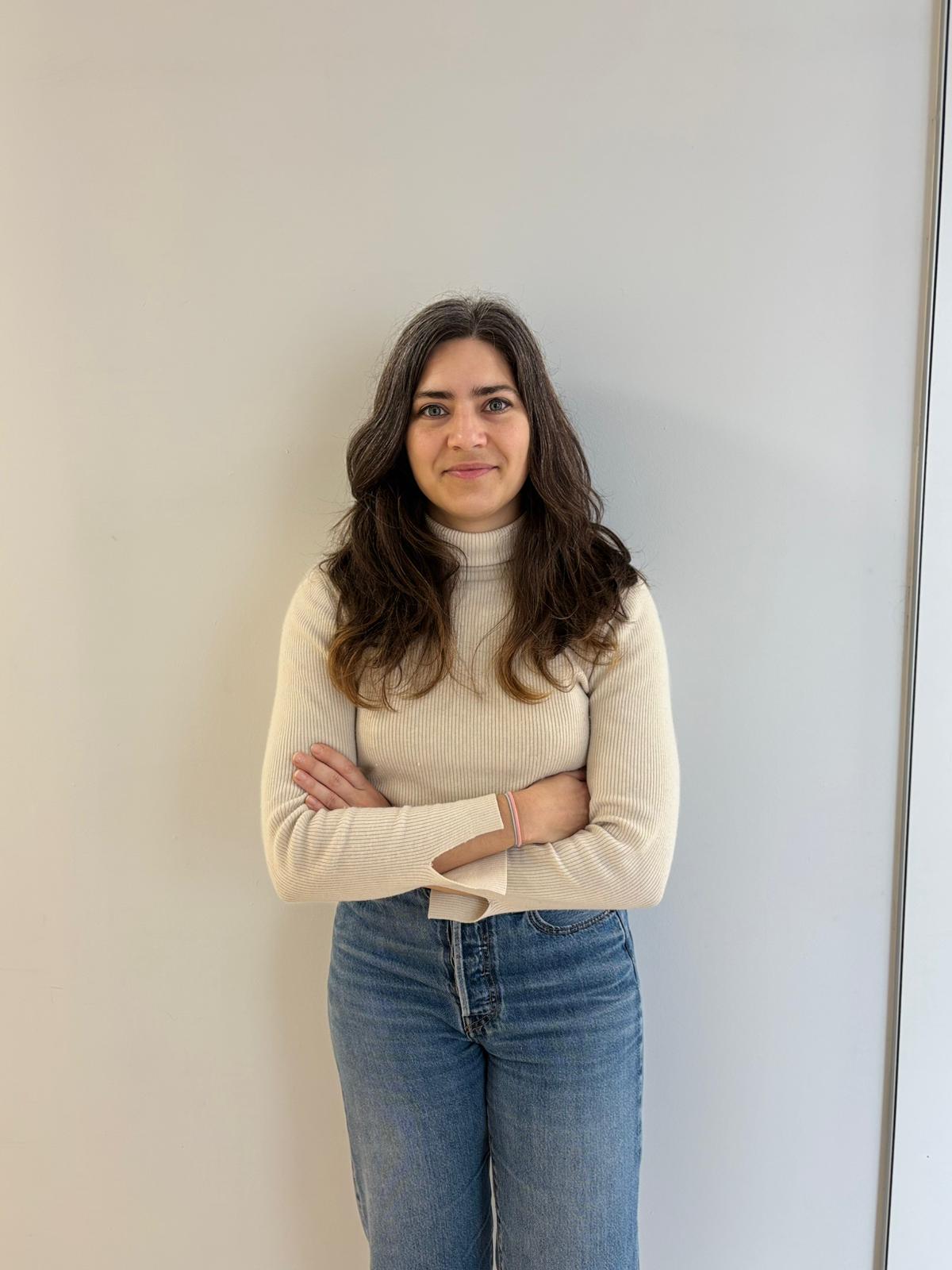
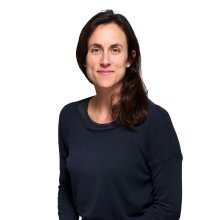
Born in Tordera (Spain) in 1988, Dr. Mònica Sánchez-Guixé completed her PhD at VHIO in 2019. After earning a Master's degree in Omics Data Analysis from the University of Vic in 2020, she spent the subsequent six years as a postdoc in Dr. Núria López-Bigas' lab at IRB Barcelona, specializing in computational genomics and initiating a key collaboration with Dr. Jaume Mora at the Institut de Recerca Sant Joan de Déu (IRSJD). Backed by a CRIS Emerging Leader grant (€400k/5 yrs) and a Ramón y Cajal fellowship, in June 2026, she became Group Leader of the Pediatric Cancer Genomics Laboratory at IRSJD.
"Science is a collaborative effort, and the best ideas come from conversations with your peers. Being under Núria's guidance allowed me to gain confidence in my own ideas, criteria, and scientific voice."
Mònica, could you tell us about the Pediatric Cancer Genomics Laboratory that you now lead at IRSJD? What are its main research aims and focus?
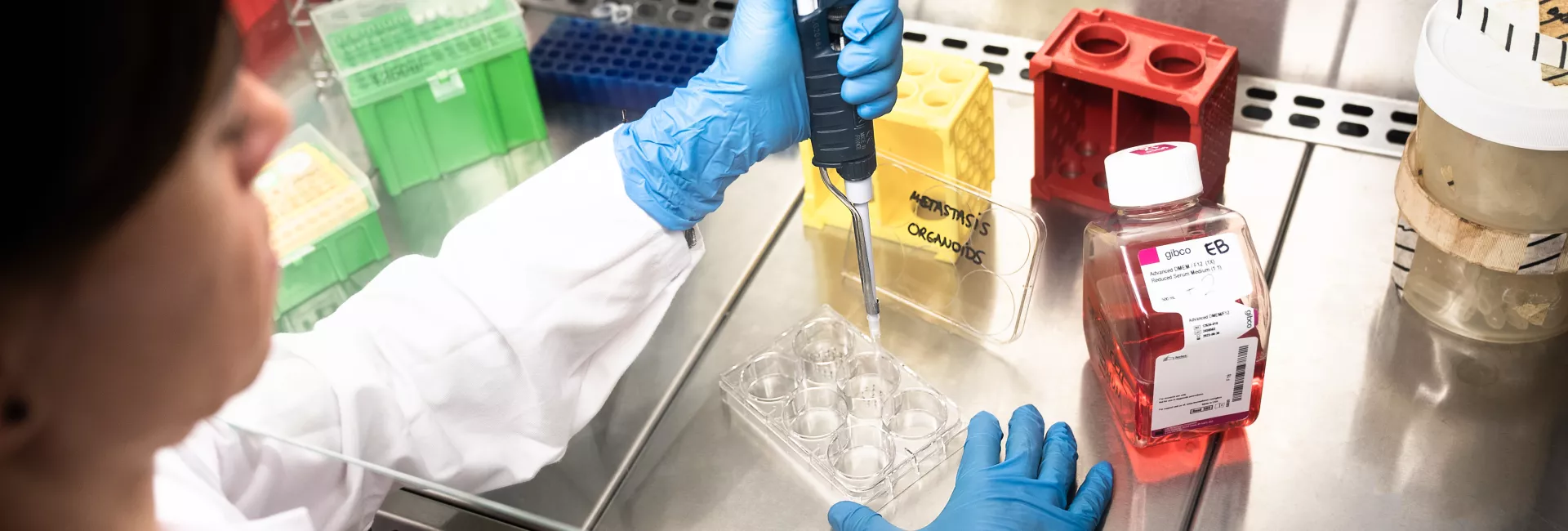
The lab was launched in June this year. It focuses on the genomic characterization of pediatric solid tumours, such as bone and soft-tissue sarcomas and central nervous system (CNS) tumours. These tumours are suspected to originate during prenatal development, with the first genetic hit occurring during the initial weeks of pregnancy. For some of them, another non-genetic hit seems to occur during the child's life. The main aim of my research is to identify when exactly (in terms of the patient’s life) these events occur for some of the most aggressive pediatric cancers, including rhabdoid tumours, rhabdomyosarcoma, medulloblastoma, and Ewing sarcoma.
Why is your research field important? What are the key questions your group is trying to answer?
Pediatric cancer has historically been understudied compared to adult cancer. While there is an abundance of genomic evolution studies in the adult cancer field, relatively little has been explored in pediatric solid tumours. Understanding the precise sequence of steps necessary for the emergence of such tumours can potentially uncover new targetable vulnerabilities and assess whether pediatric cancer prevention can become a reality.
The key research questions addressed by my group include:
- How do pediatric solid tumours originate?
- How do metastatic spread and evolutionary trajectory occur in pediatric solid cancer, both in primary tumours and after treatment?
- Why do certain children develop extremely rare pediatric tumour types?
Let’s go back; tell us a little about the focus of your PhD research
My PhD thesis was actually on a quite different topic from the research I lead today. I conducted my doctoral work at VHIO in the Experimental Therapeutics Group led by Dr. Violeta Serra. It focused on identifying biomarkers of response and mechanisms of resistance to targeted therapies in luminal breast cancer, specifically FGFR and PI3K inhibitors.
After completing your PhD, what brought you to IRB Barcelona?
My PhD work was entirely experimental—focused on cell culture, mouse models, and wet-lab sample processing. Towards the end, I became deeply curious about how to analyze the massive amounts of genomic data being generated in cancer research. To bridge this gap, I enrolled in a Master of Science in Omics Data Analysis at the University of Vic to build expertise in bioinformatics.
In 2020, during that master's programme, I reached out to Dr. Núria López-Bigas at IRB Barcelona to inquire about conducting my master's thesis in her lab. I joined the lab, and after finishing my studies, I stayed on as a postdoctoral researcher for six years. It was during this postdoc that I established a key collaboration with Dr. Jaume Mora, who is now my mentor at IRSJD. Under Núria's mentorship, I gained comprehensive expertise in computational genomics, while my collaboration with Jaume provided deep clinical knowledge of pediatric cancer. That synergy enabled me to forge a unique niche: the computational genomics of pediatric cancer.
Looking back at your time at IRB Barcelona, how did your experience shape your scientific career and prepare you to become an independent group leader?
My postdoctoral stay at IRB Barcelona was pivotal for building my scientific future. Working in Núria's lab provided me with advanced computational skills that allowed me to analyze complex pediatric cancer cases and rare tumours from a completely fresh perspective, leading to a key publication in Cancer Discovery (2024) and a preprint in bioRxiv (2026).
My time at the institute also helped me build a vibrant collaborative ecosystem. I led the creation of the Pediatric Tumours Interest Group, a collaborative network designed to connect pediatric cancer researchers across key institutes in Barcelona, including IRB Barcelona, IRSJD, VHIO, CNAG, and VHIR. Through this network, in February 2026, our team organized the inaugural Pediatric Cancer Symposium at IRB Barcelona, which brought together over 80 pediatric cancer researchers from across Barcelona.
What are the most valuable lessons or experiences you took away with you from IRB Barcelona?
My years at IRB Barcelona marked my transition from junior to senior researcher—it was a period of true scientific maturation. Guided by Núria, I learned to have confidence in my own ideas, scientific criteria, and vision. I also absorbed fundamental values from her lab, above all the essential role of teamwork. Being surrounded by extraordinarily smart, generous colleagues who were always ready to offer support taught me that science cannot be done in isolation. Science is inherently collaborative, and the most groundbreaking ideas spark from open conversations with your peers.
What are your favourite memories of your time at IRB Barcelona?
Núria's lab is a wonderful place to do science while enjoying everyday life in the lab. I treasure so many fantastic memories: everyday jokes, shared lunches, after-work hangouts, and memorable lab retreats. The López-Bigas lab is full of kind, warm, and brilliant people. I miss them so much already!
Looking into the future, what do you think will be the breakthroughs in your research field over the next 10 years?
My institution, IRSJD, is currently experiencing a period of vital growth. Several junior group leaders like me are establishing independent research teams across computational biology, epigenetics, and immunotherapy. Beyond IRSJD, pediatric cancer research is gaining significant momentum in many leading centres across Europe. I expect that this increased funding capacity and the influx of highly specialized young talent will accelerate our understanding of pediatric cancer—from its earliest developmental origins to the engineering of novel therapeutic interventions. This collective push will ultimately bring new hope to children affected by cancer and their families.
About IRB Barcelona
The Institute for Research in Biomedicine (IRB Barcelona) pursues a society free of disease. To this end, it conducts multidisciplinary research of excellence to cure cancer and other diseases linked to ageing. It establishes technology transfer agreements with the pharmaceutical industry and major hospitals to bring research results closer to society, and organises a range of science outreach activities to engage the public in an open dialogue. IRB Barcelona is an international centre that hosts 400 researchers and more than 30 nationalities. Recognised as a Severo Ochoa Centre of Excellence since 2011, IRB Barcelona is a CERCA centre and member of the Barcelona Institute of Science and Technology (BIST).