Images
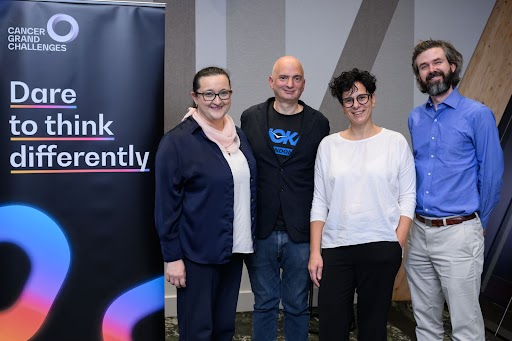
- Dr. Núria López-Bigas, co-leader of the PROMINENT Cancer Grand Challenges team, will lead its participation in AURORA, an initiative exploring the use of AI co-scientists in cancer research.
- The PROMINENT team has been awarded $1.31 million in additional funding to investigate how healthy cells carrying cancer-related mutations can develop into tumours.
- The project will combine artificial intelligence with experimental research to identify and test new hypotheses about the earliest stages of cancer development.
Cancer Grand Challenges has selected the PROMINENT team, co-led by Dr. Núria López-Bigas, ICREA researcher at IRB Barcelona, to participate in AURORA, a pioneering initiative exploring how artificial intelligence (AI) can help scientists accelerate cancer discoveries.
PROMINENT, an international consortium, received $25 million in funding from Cancer Grand Challenges in 2022 to investigate the earliest stages of cancer development. PROMINENT is now one of three teams selected to co-develop AI co-scientists through AURORA, with $1.31 million in additional funding. Dr. López-Bigas will lead, together with Dr. Emma Lundberg from Stanford University, the team’s work in AURORA.
The research will focus on a fundamental question in cancer biology: how do tumor promoter mutations change cells and tissues to drive cancer? The AI tools will help researchers analyse scientific literature and large-scale biological datasets, identify mechanisms that trigger tumour development, and propose new hypotheses for experimental testing. The team will also explore how age, sex and other biological factors influence this process.
"We can now identify the mutations that drive clonal expansions in normal tissues and that underlie cancer development, yet for most of them the mechanisms through which they promote tumorigenesis remain unknown. Systematizing this discovery is difficult because each cancer gene participates in different processes and pathways and alters the cell in different ways. By combining AI agents with our experimental research, we aim to systematically advance our understanding of these mechanisms and identify opportunities to prevent cancer before it starts," says Dr. López-Bigas, head of the Biomedical Genomics Laboratory at IRB Barcelona.
AI as a scientific collaborator
Led by Dr. Marinka Zitnik at Harvard Medical School, AURORA is developing AI systems capable of working alongside researchers to analyse evidence, generate hypotheses and propose experiments. These agentic systems can interact with scientific databases and computational resources to support complex research tasks, while scientists retain full responsibility for evaluating results and making decisions.
The $10 million AURORA programme is funded by Cancer Research UK through Cancer Grand Challenges. PROMINENT's core research programme is funded by Cancer Research UK, the US National Cancer Institute and the Scientific Foundation of the Spanish Association Against Cancer through Cancer Grand Challenges.
More information: Cancer Grand Challenges – Project AURORA
About IRB Barcelona
The Institute for Research in Biomedicine (IRB Barcelona) pursues a society free of disease. To this end, it conducts multidisciplinary research of excellence to cure cancer and other diseases linked to ageing. It establishes technology transfer agreements with the pharmaceutical industry and major hospitals to bring research results closer to society, and organises a range of science outreach activities to engage the public in an open dialogue. IRB Barcelona is an international centre that hosts 400 researchers and more than 30 nationalities. Recognised as a Severo Ochoa Centre of Excellence since 2011, IRB Barcelona is a CERCA centre and member of the Barcelona Institute of Science and Technology (BIST).