
Images
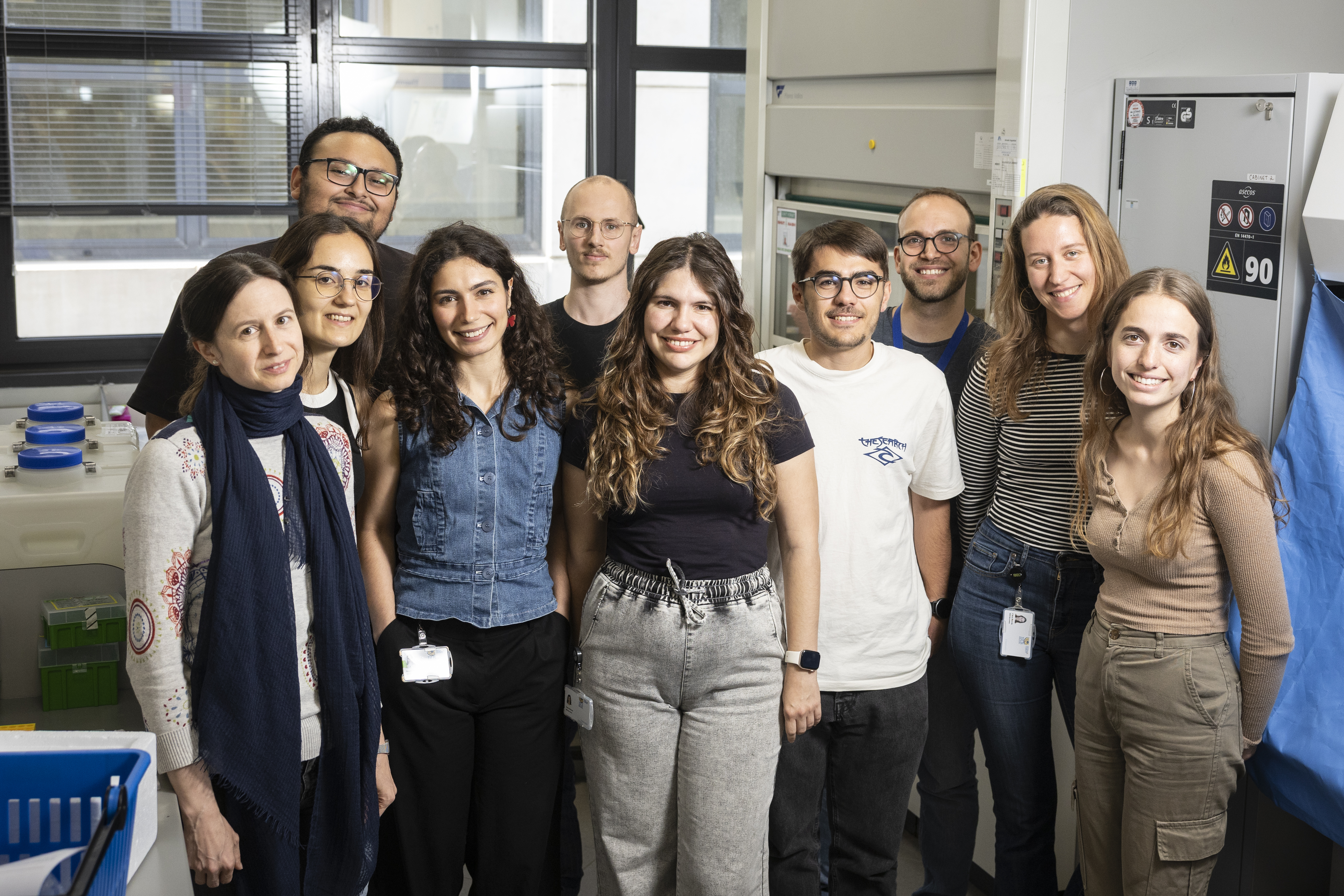
- Researchers at IRB Barcelona have found that a widely used mouse model resists weight gain due to unintended genetic effects of the experimental tool itself.
- Published in the European Journal of Immunology, the findings highlight the importance of appropriate controls and support efforts to develop improved research tools.
Understanding how immune cells contribute to obesity can help researchers identify ways to prevent its associated health problems. To investigate these processes, scientists use genetic tools that allow them to switch off individual genes in specific cell types. But what happens when the tool itself affects the outcome?
A study led by Dr. Stefanie K. Wculek, head of the Innate Immune Biology laboratory at IRB Barcelona, has identified precisely this problem in MRP8-Cre mice, a model widely used to study neutrophils. These immune cells help protect against infection but can also contribute to inflammation in chronic diseases.
Published in the European Journal of Immunology, the work shows that these mice are resistant to weight gain and several metabolic disturbances associated with a high-fat diet as a direct consequence of the genetic construct used, rather than the targeted gene deletion or neutrophil activity.
An unexpected observation
The project began in mid-2024, when the team noticed that mice carrying the MRP8-Cre genetic construct weighed less than their littermates, even at an early age. The researchers then investigated whether this difference persisted under the metabolic stress of a high-fat diet.
“We first noticed that the mice were lighter than their littermates. When we tested a high-fat diet, we were struck by how strongly they resisted weight gain and the associated metabolic problems,” says Stephan Forisch, first author of the study.
The mice accumulated less body fat and showed better glucose tolerance, alongside reduced fat accumulation in the liver, particularly in males. These differences were not explained by lower food intake. Independent experiments at McGill University also found resistance to weight gain, strengthening the evidence that this was a feature of the mouse model itself.
Separating the tool from its effects
Previous research had shown that inserting the MRP8-Cre construct into the mouse genome unintentionally disrupted two genes, Serpine1 and Ap1s1. The new study found reduced expression of both genes in metabolic tissues, including fat and liver.
The researchers suggest that these changes, particularly the reduction in Serpine1, which encodes the protein PAI-1, help explain the protection. However, the precise contribution of each gene and other possible factors remains to be established.
The practical implication is that researchers could mistakenly attribute this protection to neutrophils (the gene they intended to investigate in neutrophils) if appropriate transgene-only control mice are not included in experiments.
“To understand what a particular gene in neutrophils does, we need to distinguish its effects from those of the experimental tool. Our findings highlight the importance of appropriate controls and of continually evaluating and improving the models we use. To address this, we are currently exploring funding opportunities to develop an improved model,” concludes Dr. Wculek.
The study involved collaborators at McGill University, the University of Leeds and Northwestern University. Funding included support from the European Research Council, Spain’s Ministry of Science, Innovation and Universities through the State Research Agency, and the ”la Caixa” Foundation.
Related article:
MRP8-Cre Transgenic Mice Are Resistant to Weight Gain and Diet-Induced Obesity Independently of Neutrophils
Stephan Forisch, Fatemeh Soltani, Laia Salvat Costa, Beatriz M. Cardoso, Yaiza Moreno Galiano, Cedric Duval, Robert A. S. Ariëns, Navdeep S. Chandel, Mari T. Kaartinen & Stefanie K. Wculek
European Journal of Immunology (2026) DOI: 10.1002/eji.70271
About IRB Barcelona
The Institute for Research in Biomedicine (IRB Barcelona) pursues a society free of disease. To this end, it conducts multidisciplinary research of excellence to cure cancer and other diseases linked to ageing. It establishes technology transfer agreements with the pharmaceutical industry and major hospitals to bring research results closer to society, and organises a range of science outreach activities to engage the public in an open dialogue. IRB Barcelona is an international centre that hosts 400 researchers and more than 30 nationalities. Recognised as a Severo Ochoa Centre of Excellence since 2011, IRB Barcelona is a CERCA centre and member of the Barcelona Institute of Science and Technology (BIST).